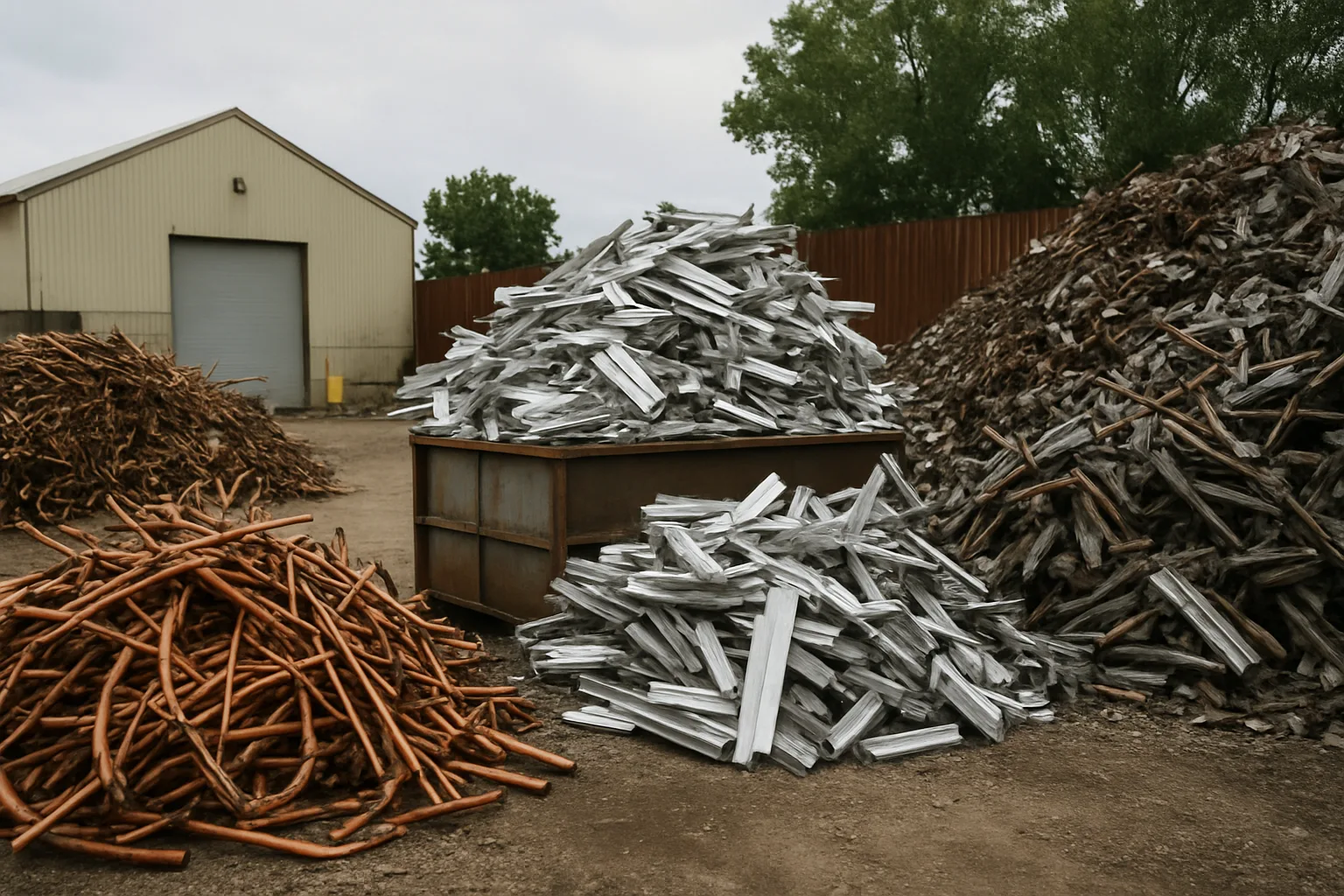
What to Do With the Scrap When You're Clearing an Estate in Saskatchewan
Most estate cleanouts don't go the way families expect. You show up expecting a weekend's worth of work and find a shop full of equipment, two dead vehicles in the back forty, a pile of old copper wire in the corner, and a grain bin nobody's touched in fifteen years. That's not a cleanout — that's a full-scale scrap removal project. And if you're trying to handle it yourself, you're leaving serious money on the table.
Whether you're settling an estate in Regina, clearing a farmstead outside of Moose Jaw, or dealing with a commercial property in the province's industrial corridor, knowing how to move metal efficiently makes the difference between recovering value and paying someone to haul it away. This guide walks you through exactly how to approach estate and property scrap removal across Saskatchewan — what to keep, what to sell, and how to make the process as painless as possible.
Why Estate Cleanouts Often Hide More Scrap Value Than You Think
An estate cleanout involving a rural Saskatchewan property almost always includes scrap metal — the question is whether you recognize it. Old farm equipment, decommissioned vehicles, shop tools, irrigation hardware, fuel tanks, and decades of collected copper wire and pipe all carry real scrap value in 2026's commodity market. The problem is that most executors and family members don't know what they're looking at.
Here's a quick breakdown of what commonly surfaces in Saskatchewan estate cleanouts and what category each falls into:
- Scrap vehicles — cars, trucks, half-tons, and ATVs that haven't run in years. These are prime candidates for scrap car removal Regina services or rural Saskatchewan pick up routes.
- Farm equipment — combines, swathers, cultivators, seeders, and augers. Heavy iron with real scrap weight behind it.
- Non-ferrous materials — copper wire, electrical cable, plumbing pipe, and brass fittings. These are the high-value items in any cleanout.
- Structural steel — old grain bins, corrugated panels, steel fencing, and shop racking.
- Appliances and HVAC equipment — furnaces, refrigerators, air conditioners. These often contain copper coils and aluminum components that boost their value.
- Oil field materials — pipe, casing, sucker rod, and instrumentation scrap from agricultural or energy operations.
The key point: don't sort everything into a single pile and call it "junk." Separating ferrous from non-ferrous, and pulling out copper-bearing items before the haul, can significantly improve what you recover. Platforms like SMASH Recycling — free scrap metal pick up across Canada help connect you with vetted buyers who pay based on actual material categories — not a flat-load guess.
Scrap Car Removal Regina: What You Need to Know Before You Call
Dead vehicles are one of the most common items left behind in estate cleanouts, and one of the easiest to deal with — if you know the process. Regina has several pick up options for end-of-life vehicles, but not all services are equal. Here's what matters when you're arranging scrap car removal Regina services as part of a larger cleanout.
Title and ownership documentation — This is the first question most services ask. If the estate is still in probate, or if the vehicle title is in the deceased's name, that creates a paperwork layer you need to navigate. Many services will still process scrap car pick up no title situations, particularly for older vehicles, but you'll need to demonstrate legal authority over the estate. Have the letter of administration or grant of probate available.
Vehicle accessibility — The vehicle needs to be reachable by a flatbed or tow truck. If it's buried in a field, frozen into the ground, or blocked by other equipment, communicate that upfront. Rural routes across Saskatchewan can accommodate this, but it affects scheduling and potentially the pick up conditions.
Multiple vehicles vs. single units — Estate cleanouts involving multiple vehicles typically qualify for free pick up for qualifying loads. A single vehicle may have different terms depending on location and condition. Always confirm this before booking. For Regina scrap metal services, the process is usually straightforward — but rural locations may need to be grouped into a single route visit for pick up to make sense logistically.
What the vehicle is worth — A typical end-of-life passenger vehicle weighs roughly 1,200 to 1,800 kg. At current scrap steel prices, the base metal value is real, even on a rusted-out frame. Vehicles with intact catalytic converters, copper wiring harnesses, or aluminum wheels carry additional non-ferrous value on top of that.
How to Sort and Stage an Estate Cleanout for Maximum Scrap Recovery
One of the biggest mistakes families make during an estate cleanout is mixing everything together before the scrap hauler arrives. Sorting takes a few extra hours but pays off. Here's a practical staging process that works for both urban Regina properties and rural Saskatchewan farmsteads.
- Walk the entire property first. Don't start hauling until you've catalogued what's there. This includes outbuildings, back fields, and any lean-tos or sheds. Estate inventories regularly miss significant scrap volumes that were stored out of sight.
- Separate non-ferrous from ferrous. Use a magnet. If it sticks, it's ferrous (steel or iron). If it doesn't, it's non-ferrous (copper, aluminum, brass, stainless). Non-ferrous materials should be staged separately — they pay more and should never end up in a mixed iron pile.
- Pull copper-bearing items. Old electrical panels, motors, transformers, refrigeration coils, and wiring harnesses all contain copper. Strip what you reasonably can and stage it separately. Electricians and HVAC contractors who've worked the property may have left behind wire offcuts or copper pipe — check everywhere.
- Identify vehicles by condition. Running vehicles have different recovery options than dead ones. Know which is which before you call for scrap vehicle pick up Regina or rural Saskatchewan services.
- Stage materials outside and accessible. Pick up services do not enter private homes. Everything needs to be outside, in an open garage, or otherwise accessible to a truck and equipment. For rural properties, this means staging near a driveway or yard access point.
- Document what you have. Photos are your best tool. A clear set of images — vehicles, equipment, non-ferrous piles, structural steel — helps service providers quote accurately and helps you track what left the property during settlement.
If you're handling a large estate and need a structured approach to documenting and selling bulk scrap, SMASH's inventory tools and vetted buyer network are built for exactly this situation. More buyers competing for documented loads means better price discovery — especially on non-ferrous material that carries real per-pound value.
Scrap Metal Prices Today: What to Expect in 2026
Scrap metal prices fluctuate with commodity markets, so any figure quoted today may shift by next week. That said, here's a general sense of the categories you'll encounter in a Saskatchewan estate cleanout and how they typically rank in value.
- Copper wire and pipe — consistently the highest-value scrap material per pound. Bare bright copper wire, clean copper pipe, and copper tubing all command premium pricing. Insulated wire pays less due to the insulation weight.
- Aluminum — extrusions, cast aluminum, and aluminum cable all pay well. Aluminum from farm equipment, irrigation systems, and grain handling equipment is common on Saskatchewan properties.
- Brass — fittings, valves, and plumbing fixtures. Often overlooked but meaningful value when accumulated from a full property.
- Stainless steel — dairy and food processing equipment, tanks, and piping. More common on mixed-use agricultural properties.
- Steel and iron — the bulk of most estate cleanouts. Lower per-pound value than non-ferrous, but volume is typically high from farm equipment and structural materials.
- Catalytic converters — if any of the estate vehicles have intact cats, these carry separate value and should be identified and handled accordingly.
Disclaimer: Scrap metal prices change daily based on commodity markets. The categories above are general guidance only. Always verify current rates before making decisions based on material value.
Want to stay current on what your scrap is actually worth? Read scrap metal pick up guides for Saskatchewan for updated insights on pricing, pick up logistics, and what buyers are looking for right now.
Rural Saskatchewan Estates: Farm Equipment, Grain Bins, and Oil Field Scrap
Urban Regina cleanouts are relatively contained. Rural Saskatchewan estate cleanouts are a different scale entirely. A working farmstead that's been in operation for forty years can easily have tens of thousands of kilograms of scrap steel on the property — much of it forgotten, buried in grass, or stacked in corners nobody's touched in a decade.
Common rural estate scrap inventory includes:
- Combines, swathers, and tillage equipment — old iron with real weight behind it
- Grain bins — corrugated steel panels, hopper cones, aeration equipment, and fans with copper motors
- Fuel and chemical storage tanks — require proper decommissioning before removal
- Wire and fencing — significant volume on larger properties
- Shop equipment — welders, compressors, metal lathes, drill presses — often contain copper windings and motors
- Oil field materials if the property had surface lease activity — pipe, casing, instrumentation
Hauling this material yourself isn't practical. You need a service with the right equipment, the coverage to reach rural communities across Saskatchewan, and the connections to ensure bulk loads move to buyers who pay on material — not on convenience. Scrap metal pick up across Saskatchewan is available for qualifying loads, including farm cleanouts, rural properties, and multi-vehicle estates. If you're not sure whether your load qualifies, the fastest answer is a phone call.
How SMASH Fits Into an Estate Cleanout Strategy
When you're dealing with bulk, documented scrap from an estate — especially loads that include non-ferrous material — the old model of calling one buyer and taking whatever they offer doesn't hold up. Estate executors and family members deserve to know they recovered fair value from the property's scrap material, not just whatever a single buyer decided to quote at 7 AM.
SMASH connects sellers to vetted buyers through a competitive auction format. That means your documented load — whether it's a mix of vehicles, farm iron, and copper wire — gets seen by multiple buyers, not just one. Competition reveals what the market actually pays. There are no subscription fees, and SMASH only wins when you do. For bulk estate scrap, that structure makes a real difference.
You can schedule your scrap metal pick up in Saskatchewan for qualifying loads and connect through SMASH's buyer network for loads that warrant competitive pricing. Whether you're in Regina working through an urban estate or managing a rural property hours from the city, the process starts with documenting what you have and getting it in front of buyers who compete for it.
For qualifying loads across Saskatchewan — estate cleanouts, farm equipment, scrap vehicles, and bulk non-ferrous — free pick up is available. Trades are welcome and copper-bearing products pay top dollar. Call 1-855-SMASH-74 or visit scrap-metal-pick-up.com to get started.
Frequently Asked Questions
Q: Can I get scrap car removal in Regina if I don't have the title?
Some services do handle scrap car pick up no title situations, particularly for older vehicles and estate cases. You'll typically need to provide documentation showing your legal authority over the estate — a letter of administration or probate grant. Contact the service directly and explain the situation before assuming it can't be done.
Q: How do I know if my estate cleanout qualifies for free scrap metal pick up in Saskatchewan?
Free pick up is generally available for qualifying loads — which means bulk quantities. Multiple vehicles, significant farm equipment, large non-ferrous material volumes, or a combination of these typically qualify. A single appliance or one small item usually doesn't. The best way to confirm is to call with a rough inventory of what you have.
Q: Does scrap vehicle pick up in Regina work if the vehicle is buried in a field or not accessible by road?
It depends on the situation. Most pick up services can handle vehicles in open fields, but extreme conditions — frozen into the ground, buried under debris, or requiring equipment access — affect logistics and scheduling. Communicate the access situation upfront so the right equipment gets dispatched. Photos help a lot here.
Q: What happens to copper and non-ferrous scrap during an estate cleanout — does it just go with everything else?
It shouldn't. Copper wire, pipe, aluminum, and brass all pay significantly more per pound than steel. If non-ferrous materials get mixed into a steel load, you lose that premium. Sort and stage them separately before pick up. Services that handle trade quantities of copper and non-ferrous — like those connected through SMASH — pay top dollar when material is properly identified and separated.
Q: How long does it take to schedule scrap metal pick up for a large estate in Saskatchewan?
Timing depends on location, load size, and current route scheduling. Urban Regina cleanouts can often be arranged within a few business days. Rural Saskatchewan properties on established pick up routes may require slightly more lead time, especially for large farm equipment that needs specialized hauling. Getting an inventory together before you call speeds up the whole process considerably.
Stay current on scrap metal prices, pick up logistics, and market trends across Saskatchewan — follow SMASH on LinkedIn at linkedin.com/company/scrap-metal-auction-sales-hub for industry updates and scrap metal market insights.