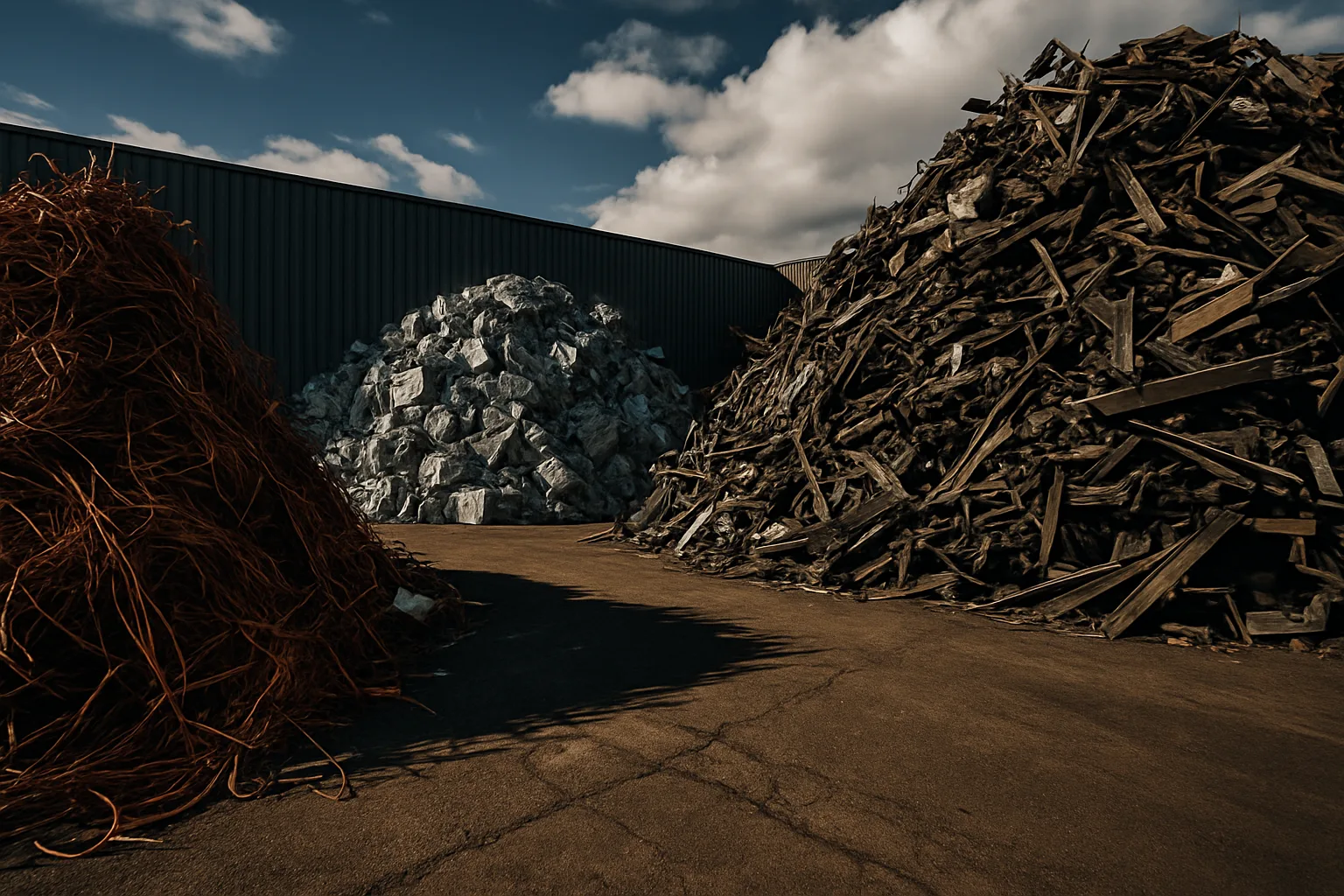
There's a combine sitting in a field south of Regina that hasn't moved since 2011. Maybe you have one just like it — half-buried in grass, stripped for parts years ago, now just weight on the land. Farmers across Saskatchewan know this story. Equipment gets parked, seasons change, and before long you've got a graveyard of iron that's costing you more in lost ground than it would ever cost to haul away. The question isn't whether to deal with it. The question is how — and whether anyone will actually come out to where you are.
This piece is a ground-level look at how farm scrap removal works in 2026, what equipment qualifies for scrap metal pick up across Saskatchewan, and how platforms like SMASH are changing the math for rural operators who've been waiting years for a reason to clean up.
---The Real Cost of Leaving Old Farm Equipment to Rust
It's easy to think of an old combine or a row of broken grain bins as a neutral cost — stuff that's just sitting there, not costing anything. But that's not quite right. Scrap equipment occupies land. It creates liability. It holds water and becomes a breeding ground for rodents. It leaches hydraulic fluid, battery acid, and old lubricants into the soil over time. And it's an eyesore that affects how your operation looks to neighbours, buyers, and anyone who walks the property.
The other cost is psychological. Anyone who's run a farm knows that a cluttered yard slows you down. You're routing equipment around piles that don't need to be there. You're mentally filing away a task that never quite makes it to the top of the list. Getting rid of it isn't just about scrap value — it's about reclaiming the yard and the bandwidth that goes with it.
- Old combines — even stripped units — carry significant steel tonnage and often still have salvageable non-ferrous components
- Grain bins — corrugated steel panels, hoppers, auger tubing, and fan housings all have scrap value
- Tractors and swathers — chassis, axles, and engine blocks move weight quickly
- Cultivators, harrows, and tillage equipment — straight steel, easy to weigh and price
- Old irrigation pipe, fuel tanks (drained), and shop scrap — bulk ferrous and non-ferrous mixed loads
The volume on a typical farm cleanup is often larger than people expect. One mid-sized operation outside of Regina recently filled multiple loads from what the owner described as "just a few things in the back field." It's always more than you think, and that's actually good news when it comes to qualifying for free pick up for qualifying loads.
---What Qualifies for Free Scrap Pick Up in Saskatchewan — And What Doesn't
Free pick up isn't unconditional, and you deserve a straight answer on this. The economics of rural haul are real. Fuel, driver time, and equipment mean that a single appliance or a half-filled truck box isn't viable for a no-cost trip. But a proper farm cleanup almost always qualifies. Here's the breakdown.
Loads that typically qualify for free pick up for qualifying loads:
- Full combines, tractors, or other heavy farm equipment — even non-running
- Multiple scrap vehicles (2 or more) at the same location
- Grain bin teardowns — corrugated steel in volume
- Bulk shop cleanouts with mixed metals — ferrous and non-ferrous
- Oil field scrap, pipe yards, and industrial lots
- Trade quantities of copper wire, copper pipe, or copper cable from farm electrical or irrigation systems
What may involve a fee or requires drop-off:
- Single small appliances or individual items without accompanying volume
- Loads that require interior home access — we do not enter private homes; items must be accessible outside, in a shop, or in an open building
- Very remote single-item calls where fuel and time exceed scrap value
If you're unsure, call it in. A quick description of what you've got — rough tonnage, number of pieces, location relative to Regina or the nearest town — is enough to get a straight answer. No guessing, no driving out for a look and then backing out. You can also schedule your scrap metal pick up in Saskatchewan online and get the conversation started from there.
---Farm Scrap Pick Up Regina and Surrounding Areas — Rural Routes Are Real
A common assumption is that free or fast pick up only applies to urban areas. Call a scrap yard in the city and ask about driving 90 kilometres south to pull a combine out of a field — you'll often get a hard no, or a quote that makes the whole thing feel not worth it. That's the gap this service is built to fill.
Farm scrap removal isn't a secondary offering here — it's a core part of what we do. The Regina scrap metal services route extends well beyond the city limits. Rural Saskatchewan, RM yards, acreages, and working farms within a practical hauling range all qualify. If you're in the corridor between Regina and Moose Jaw, east toward Weyburn, north toward the Qu'Appelle Valley, or anywhere in the agricultural belt, you're in range.
What makes rural farm pickups work logistically:
- Volume matters more than distance. A full load is worth the drive. A combine alone is usually enough volume to make a rural trip viable.
- Accessibility is more important than condition. Equipment doesn't need to run or roll — but it needs to be reachable by truck. Buried under two feet of sod or inside a collapsed structure is different from sitting in an open field.
- Copper and non-ferrous content improves the math. If your farm shop has old wiring, copper irrigation lines, or electrical components from a grain dryer, that non-ferrous volume significantly improves the case for a pick up trip.
- Combined loads ship faster. If you've got a combine, two old tractors, and a pile of bin panels — that's a strong qualifying load that moves to the top of the route.
For farmers considering a full yard cleanup, SMASH is worth reaching out to directly. The platform connects scrap sellers with vetted buyers and handles the documentation side — weight tickets, photo documentation, and auto-invoicing — so you're not chasing paperwork after the fact. That transparency matters when you're talking about a multi-load farm cleanup worth real money.
---What Happens to Your Old Combine After It Leaves the Farm
This is a question more people are asking, and it's a good one. Scrap metal isn't landfill — it's one of the most efficiently recycled materials on earth. Steel from old combines gets shredded, sorted, and fed back into electric arc furnaces where it becomes new steel. Nothing gets wasted. The tonnage from Saskatchewan farm equipment moves through regional processors and then into domestic and export steel supply chains.
Non-ferrous materials — copper wire from harvesters, aluminum from headers, brass fittings from hydraulics — follow a separate and more valuable stream. That copper from a wiring harness or a grain dryer motor isn't going in the same pile as the chassis steel. It gets sorted, weighed separately, and priced at the higher non-ferrous rate. This is why separating your metals before pick up, even roughly, can increase your return.
Catalytic converters from older diesel farm equipment are another recoverable component. If you're unsure what you have or what it's worth, platforms like SMASH make it possible to document and sell catalytic converters online with proper serial tracking and photo documentation — which matters for both pricing accuracy and compliance. For more context on how the process works, read scrap metal pick up guides for Saskatchewan to understand what buyers actually look for.
The Canadian scrap metal pick up and recycling marketplace built by SMASH is designed specifically to give sellers — including farm operators — access to competitive pricing instead of a single buyer's take-it-or-leave-it offer. That competitive pressure is what drives better price discovery. One buyer gives you one number. A vetted pool of buyers gives you the market.
---How SMASH Makes Farm Scrap Removal Less of a Headache
The old way of selling farm scrap goes like this: you call around, get a couple of vague quotes, a buyer shows up when they feel like it, and you get a cheque weeks later with no breakdown of what you were paid for what. You have no idea if the weight was right, if the grading was fair, or if you left money on the table. Most farmers accept this because there hasn't been a better option nearby.
SMASH changes that without adding complexity. The platform handles inventory documentation through photo uploads and weight tracking. Vetted buyers compete, which means price discovery instead of price guessing. Auto-invoicing means the paperwork generates itself. And because SMASH runs on a no-subscription-fee model — no win unless you win — there's no reason not to use it alongside a pick up call.
For farm operators dealing with high-value non-ferrous loads — copper wiring, aluminum headers, stainless hoppers — this competitive pricing layer is where the real difference shows up. More buyers means better price discovery. Documented inventory gives buyers more confidence to bid higher. That's not a pitch, it's just how markets work.
---Frequently Asked Questions
Q: Is scrap vehicle pick up in Regina actually free, or are there hidden fees?
Free pick up applies to qualifying loads — bulk scrap, multiple vehicles, farm equipment, or commercial volumes of non-ferrous material. Single-item pickups in remote locations may involve a fee. The honest answer is to describe your load when you call and get a straight answer upfront. No surprises.
Q: Can you pick up a combine that doesn't run and is partially sunk into the ground?
Possibly, but accessibility is the key factor. If the equipment is reachable by a haul truck and can be lifted or dragged to a flat loading area, it can usually be taken. Equipment fully buried or inside a collapsed structure requires a separate conversation about site conditions.
Q: How does farm scrap pick up work near Regina for rural RM locations?
Route planning is based on volume and proximity. Rural loads within the agricultural belt around Regina — including RM locations east toward Weyburn, west toward Moose Jaw, and north into the Qu'Appelle area — are regularly serviced. The larger the load, the more viable the trip for rural routes.
Q: Do you pay cash for old grain bins and farm equipment?
Payment depends on the load — weight, metal type, and current market rates all factor in. Scrap prices fluctuate with commodity markets, so no one should quote you a fixed number until the load is weighed and graded. Always confirm current rates at the time of your pick up.
Q: Can I sell catalytic converters from old farm equipment through SMASH?
Yes. SMASH supports documented listing of catalytic converters with serial tracking and photo verification. This protects both the seller and the buyer and ensures accurate pricing. If you have cats from older diesel tractors or combines, document them properly before selling rather than lumping them into bulk iron.
---Farm cleanup season doesn't have a hard deadline, but every year you wait is another year that equipment settles deeper, panels rust through, and the job gets harder. If you've got combines, bins, or bulk shop scrap sitting idle across Saskatchewan, the time to move it is now — when the ground is firm and the routes are clear. Scrap metal pick up across Saskatchewan for qualifying loads. Trades welcome — top dollar for copper. Call 1-855-SMASH-74 or visit scrap-metal-pick-up.com to get the conversation started.
Follow SMASH on LinkedIn for scrap metal market updates, Saskatchewan industry news, and tips on getting the most from your next load.