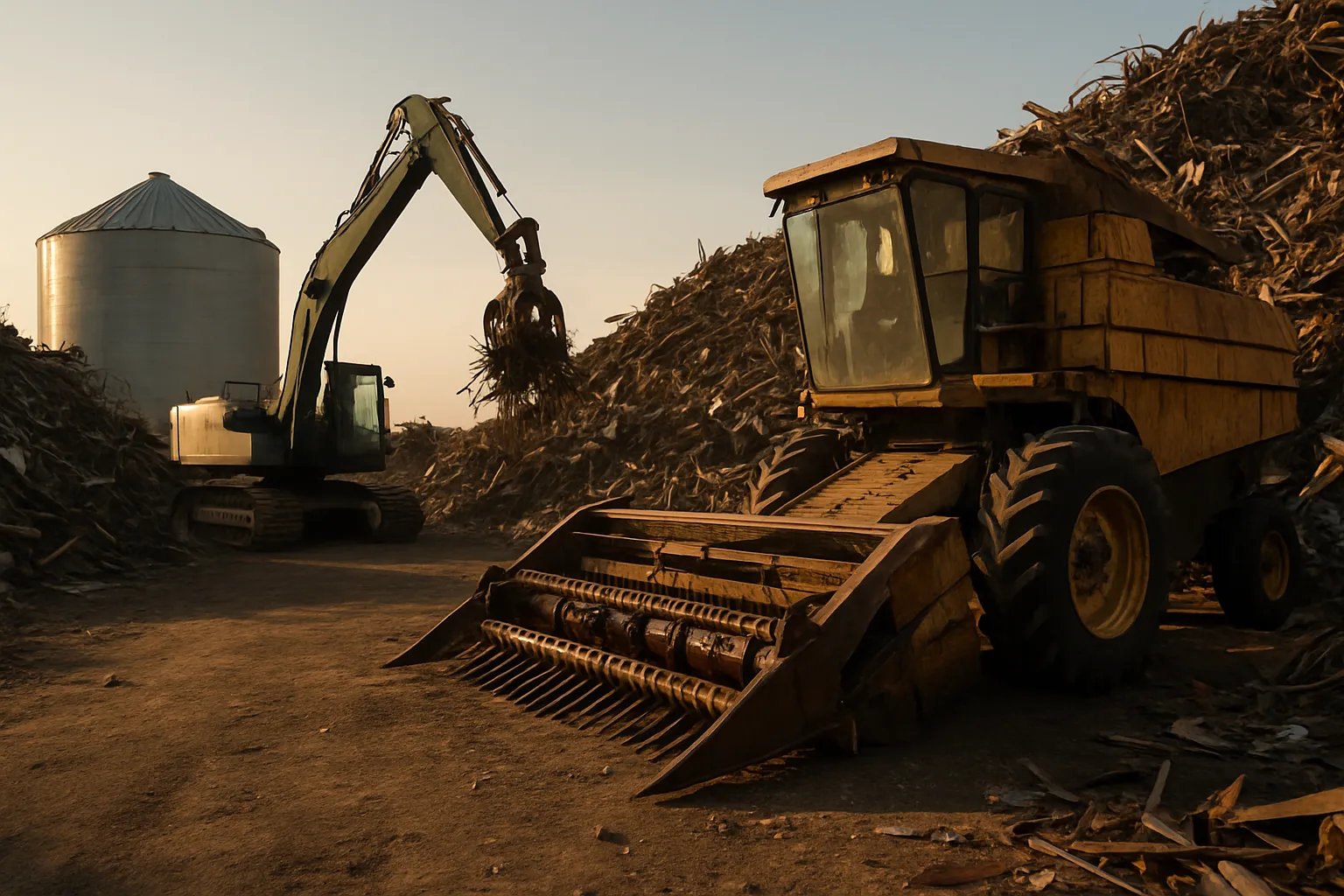
Farm Scrap Removal in Saskatchewan: Old Combines, Grain Bins, and Equipment — What's Worth the Most?
Drive down any rural road in Saskatchewan and you'll spot them — rusted combines sitting in shelter belts, collapsed grain bins, piles of steel angle iron from decades of farm repairs. That's not junk. That's metal with real market value, and most of it is just sitting there costing you nothing but space and eyesore. If you've been putting off a farm cleanup because you didn't know where to start or whether it was worth the hassle, this guide breaks it down by equipment type, metal value, and what to expect when you book a pickup.
Farmers deal with a unique problem: the scrap is big, heavy, spread across multiple acres, and often in locations a standard half-ton can't reach. That's exactly why scrap metal pick up across Saskatchewan built around rural routes and farm cleanups matters. Not every service handles this kind of volume. Not every buyer has the equipment to load a dead combine or haul a disassembled grain bin. Knowing who can actually do the job saves you time and a lot of frustration.
Why Saskatchewan Farms Are Sitting on Serious Scrap Value
Saskatchewan farms have been accumulating iron and steel for generations. A single grain bin holds anywhere from 1,500 to 4,500 kilograms of steel depending on size. A retired combine can weigh between 8,000 and 14,000 kilograms. Even smaller equipment — harrows, cultivators, augers, swathers — adds up fast when you're cleaning out a full farmyard.
Steel is the most common metal on a farm, but it's not the only one that matters. Combines and other machinery carry copper wiring in the electrical systems, aluminum in heat exchangers and components, and brass in fittings. Those non-ferrous metals pay significantly more per kilogram than structural steel. A thorough farm cleanup isn't just about hauling iron — it's about sorting properly so you're not leaving money in the pile.
- Old combines (STS, axial flow, conventional): Heavy steel frame, copper wiring harnesses, aluminum components — significant mixed-metal value
- Grain bins (corrugated steel): Pure steel, excellent scrap weight, especially larger bins
- Cultivators and harrows: Light to mid-weight steel, often in large quantities
- Augers and conveyors: Steel tube and flights, often with electric motors (copper content)
- Old tractors (pre-2000): Cast iron blocks, steel frames, copper wiring — heavier than they look
- Swathers and headers: Steel and aluminum mix, conveyor belts (non-recyclable component to strip)
- Oil field equipment (pump jacks, tanks, pipe): Industrial-grade steel, often high-grade material
If you're cleaning out a full yard — multiple machines, bins, and iron piles — you're likely looking at a qualifying load that earns free pick up. Smaller cleanups may be a different story, and it's always worth a quick call to confirm before you schedule.
Old Combines vs. Grain Bins: What Pays More and Why
This is the question every farmer asks, and the honest answer is: it depends on current steel prices and the condition and mix of metals in the equipment. That said, combines typically carry more value per unit because of the non-ferrous content buried in the machine. A grain bin is essentially pure steel — valuable by weight, but it doesn't have the copper wiring or aluminum components that drive up per-kilogram payouts.
Here's how to think about it practically:
- Combines: Strip or flag the copper wiring harnesses and electric motors before pickup if you can. Non-ferrous metals pay a premium. If you can't separate them, a buyer with in-yard sorting capability will still pay more than one that treats the whole unit as shred steel.
- Grain bins: The larger the better. A 5,000-bushel bin has significantly more steel than a 1,500-bushel bin, and pickup logistics are similar. If you have multiple bins to come down, bundle them into one pickup for efficiency.
- Headers and attachments: Often overlooked. These have real steel weight and sometimes aluminum. Don't leave them in the field when you schedule the main pickup.
- Cast iron components (engine blocks, gearboxes): Cast iron is a different grade than structural steel. Keep it separate if you can — it typically pays differently per kilogram.
Platforms like SMASH Recycling help bring competition to the buying side, which means documented farm scrap loads — with photos, weights, and metal types listed — can attract more than one serious offer. That's how price discovery actually works instead of taking whatever a single buyer offers on the phone.
How Farm Scrap Pick Up Actually Works in Rural Saskatchewan
One of the biggest misconceptions about farm scrap removal is that you need to haul the material yourself to a yard in Regina or Saskatoon. For qualifying loads, that's not the case. Rural route pickups exist specifically for this situation — a crew and equipment come to you, load on-site, and haul it out.
Here's what a typical farm cleanup pickup involves:
- Pre-pickup assessment: Photos, rough weight estimates, and a list of what's coming out. This helps confirm the load qualifies and allows the buyer to come prepared with the right equipment.
- Access requirements: Equipment must be accessible — outside, in a yard, or in an open equipment shed. We do not enter structures that aren't safely accessible. Farm fields are generally fine if there's a clear path in.
- Loading equipment: Heavy farm scrap requires proper lifting gear. Not every scrap service has a crane truck or a grapple loader. Confirm the service can handle your equipment size before booking.
- Sorting on-site or at yard: Non-ferrous metals (copper wire, aluminum) pay more when separated. If you've done even basic sorting, it shows on the payout.
- Settlement: Weight tickets and settlement documentation should come with the load. Ask for it every time.
If you're near Regina, Regina scrap metal services extend into the surrounding rural areas — you don't need to be in the city limits to access pickup. Saskatchewan rural routes run regularly, and farm cleanups are exactly the kind of volume that makes the logistics work for both sides.
To get organized before you call, read scrap metal pick up guides for Saskatchewan — there are practical breakdowns on sorting, documentation, and what to expect at different stages of the process.
Scrap Car Removal Regina: When Farm Vehicles Are Part of the Cleanup
Farm cleanups almost always include vehicles — old half-tons that haven't run in fifteen years, a retired grain truck parked behind the shop, maybe a couple of cars from a previous generation. Scrap car removal Regina and surrounding areas is one of the most common add-ons to a farm cleanup job, and it makes sense to bundle them into the same pickup rather than scheduling separately.
Old farm vehicles have scrap value, but it varies significantly based on condition. A complete truck body with a steel frame and a dead engine is mostly shred steel. But if the vehicle has a catalytic converter still attached, a working battery, aluminum rims, or a copper-wound starter motor, those components add real money when separated. A junked half-ton on a farm is worth more than people usually expect — especially if it hasn't been stripped already.
For scrap vehicle pick up Regina and rural Saskatchewan, the same qualifying load rules apply. One vehicle by itself may not justify a rural route trip — but one vehicle as part of a broader farm cleanup absolutely does. Bundle your vehicle removals into the farm cleanup job and schedule your scrap metal pick up in Saskatchewan all at once.
Copper-Bearing Equipment: The High-Value Category Most Farmers Miss
Farmers focus on the obvious big iron — the combine, the bins, the old tractor. But the highest value per kilogram on any farm usually comes from copper-bearing equipment, and it's often hidden in places people don't think to look during a cleanup.
Common copper-bearing sources on Saskatchewan farms:
- Electric motors (grain bin aeration fans, auger drives, shop equipment)
- Wiring harnesses from combines, tractors, and trucks
- Copper pipe and fittings in shop plumbing or older heating systems
- Transformer cores from old electrical equipment
- Irrigation pump motors if applicable
- Aluminum irrigation pipe (non-ferrous premium pricing)
This is also where trades come in. If you have an electrician, HVAC tech, or plumber on your farm operation, the wire, cable, and copper pipe from job sites or farm upgrades carries premium value. SMASH pays top dollar for copper-bearing products — don't mix it in with the iron pile.
The difference between throwing everything into a single pile and doing basic separation can be meaningful on a large farm cleanup. It's worth the extra hour of sorting before the crew arrives.
Frequently Asked Questions
Q: Is farm scrap pick up in Saskatchewan really free?
Free pick up applies to qualifying loads — typically bulk farm cleanups, multiple pieces of equipment, grain bins, or large iron piles. A single small item or light load may have a pickup fee. Call ahead with a description of what you have and we'll tell you straight whether the load qualifies. When in doubt, send photos.
Q: How do I book scrap car removal in Regina for a farm vehicle?
Contact us with the vehicle details — year, make, rough condition, and location. Farm vehicles on rural properties outside Regina are covered on regular rural routes. Bundling a scrap vehicle removal with a broader farm cleanup is the most efficient approach and often confirms the load as qualifying for free pickup.
Q: Do I need to dismantle the grain bin before pick up?
Not necessarily. Some pickup services handle bin takedown as part of the process. Others prefer the bin already knocked down or disassembled. Confirm with the pickup crew before they arrive — the answer depends on the size of the bin and the equipment on the truck that day.
Q: What metals pay the most on a farm cleanup?
Copper wire and pipe pay the highest rate per kilogram. Aluminum components (headers, heat exchangers, irrigation pipe) follow. Cast iron and structural steel pay by weight and are lower per kilogram but make up for it in volume. Sorting non-ferrous metals from the steel pile before pickup maximizes your payout.
Q: Can SMASH help me get a better price for a large farm scrap load?
Yes. For documented loads with photos, weights, and a clear metal breakdown, SMASH creates competition among vetted buyers rather than leaving you to negotiate with a single yard. More buyers means better price discovery — especially for large or complex loads like full farm cleanups with mixed metals.
---Farm cleanups across Saskatchewan don't have to be a project you keep pushing to next season. If you've got combines, bins, old trucks, and iron piles that have been sitting long enough, the market is ready for them now. Whether you're in the Regina area or on a rural property hours from the nearest city, free pick up for qualifying loads means you're not hauling it yourself. Call 1-855-SMASH-74 or visit scrap-metal-pick-up.com to get your farm cleanup on the schedule. Trades welcome — top dollar for copper, non-ferrous, and copper-bearing equipment.
Follow SMASH on LinkedIn for scrap metal market updates, pricing trends, and industry insights: SMASH Scrap Metal Auction Sales Hub on LinkedIn.