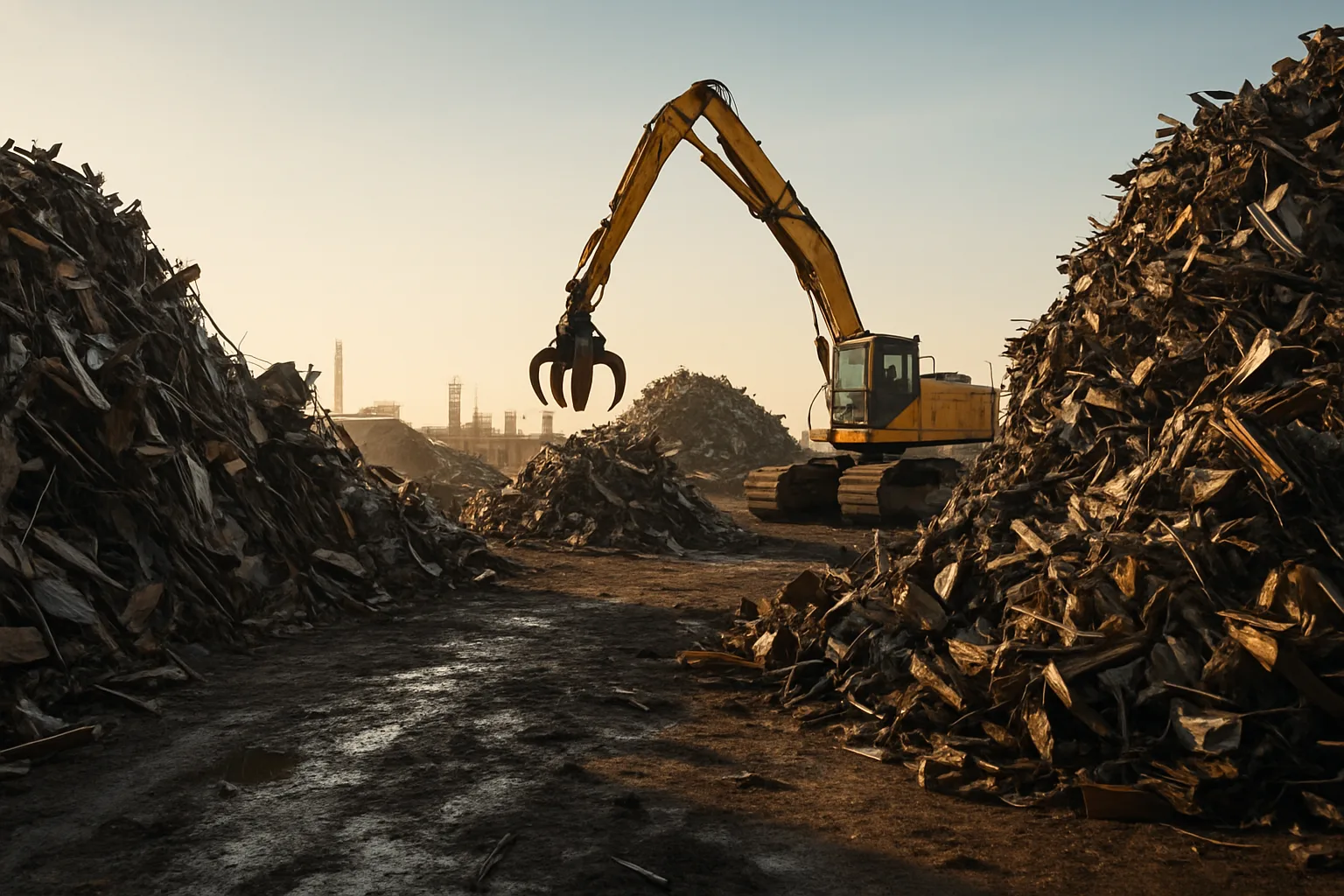
What Oil Field and Industrial Sites in Saskatchewan Leave Behind (And What It's Worth)
If you've ever stood beside a decommissioned well site or walked through an industrial yard at the end of a contract, you already know — the scrap adds up fast. Steel pipe, pump jacks, cable reels, electrical panels, valve assemblies, structural steel. Saskatchewan's oil patch and industrial corridor generates serious volume, and most of it is just sitting there, costing you money in liability, land use, and cleanup compliance.
This guide breaks down exactly how oil field and industrial scrap pick up works in Saskatchewan, what metals command the best returns, and how to move bulk material without turning it into a second job.
What Counts as Oil Field and Industrial Scrap in Saskatchewan
Not everything on a well site or industrial property is hazardous or complicated. A large portion of what gets left behind is straightforward ferrous and non-ferrous metal — the same metals recyclers buy every day. Knowing what you have before you make a call saves time and gets you a more accurate offer.
Common oil field and industrial scrap categories in Saskatchewan include:
- Steel pipe and casing — surface pipe, flow lines, and decommissioned downhole casing that's been pulled and cleaned
- Pump jacks and wellhead equipment — heavy ferrous steel, often multi-tonne per unit
- Cable and electrical wire — copper-bearing products command a significantly higher rate than structural steel
- Electrical panels and motor control centres (MCCs) — mixed metals, often with copper bus bars and aluminum components
- Tank batteries and separator vessels — large volume steel, must be cleaned and gas-freed before pickup
- Structural steel, grating, and handrail — from decommissioned skids, platforms, and processing facilities
- Compressor units and engines — high-value depending on condition, copper windings in motors
- Instrumentation and control wiring — multi-strand copper cable often bundled in conduit
If it came off a well site, a processing facility, or an industrial plant — there's a good chance it has scrap value. The question is whether your volume qualifies for scrap metal pick up across Saskatchewan or whether drop-off makes more sense for your situation.
Free Pick Up for Qualifying Industrial Loads — What That Actually Means
Free pick up isn't unconditional. That's worth being straight about. The economics of hauling heavy scrap across Saskatchewan depend on volume, metal type, and access. A single valve and a few feet of pipe doesn't move the needle. A full decommissioned well site? That's a different conversation entirely.
Qualifying loads for free scrap metal pick up typically include:
- Multi-tonne volumes of ferrous steel (pipe, structural, vessels)
- Trade quantities of copper wire, cable, or non-ferrous material
- Multiple scrap vehicles or heavy equipment in one location
- Farm or rural industrial cleanups with several material types combined
- Commercial or oil field decommissioning projects with documented volume
If you're a project manager or site supervisor in Regina or across the province coordinating a decommission, schedule your scrap metal pick up in Saskatchewan early. Lead time matters for route planning, especially on rural or remote sites in the southern oil corridor between Swift Current and Estevan.
Small loads — a single appliance, one piece of equipment, a single item — may carry a pickup fee. For those, drop-off at a local yard is usually the better move financially.
Copper and Non-Ferrous: Where the Real Value Is in Industrial Scrap
Steel pays by the tonne. Copper pays by the pound. That gap matters more than most people realize until they've sorted a load properly.
Industrial and oil field operations are full of copper-bearing products — motor windings, instrumentation cable, power distribution wire, grounding systems, heat exchanger tubing, and transformer cores. On a major decommission, the non-ferrous component can represent a fraction of the weight but a significant share of the total scrap value.
This is especially relevant for:
- Electricians pulling wire from industrial facilities or plant shutdowns
- HVAC contractors with copper refrigerant lines and heat exchanger material
- Plumbers replacing copper pipe on commercial or institutional jobs
- Industrial contractors doing full decommissions with mixed non-ferrous material
We pay top dollar for copper-bearing products. Trade quantities are exactly what we want. Don't mix your copper into a general steel load — separate it, and you'll see the difference in your return. Platforms like schedule scrap metal pick up through SMASH connect sellers with vetted buyers in a competitive auction format, which helps reveal actual market value instead of leaving money on the table with a single buyer and a phone call.
How to Prepare an Oil Field or Industrial Site for Scrap Pick Up
Preparation is where most delays happen. A well-prepared site moves faster, reduces hauling costs, and can affect what you're offered. This is the practical side that project managers need to know before they book a pickup.
Step 1 — Hazardous material separation. Oil field equipment often has residual hydrocarbons, produced water, or H2S exposure history. Vessels, tanks, and any equipment that held product must be cleaned and gas-freed. This isn't optional — it's a safety and legal requirement. Scrap haulers will not load material that hasn't been cleared.
Step 2 — Sort by metal type where possible. Ferrous steel, copper, aluminum, and stainless steel should be staged separately if your site allows it. Even a rough sort improves the efficiency of loading and helps with accurate valuation.
Step 3 — Confirm access. Can a heavy haul truck get to your material? Rural Saskatchewan sites sometimes require road agreements, seasonal weight restrictions, or gravel surface access. Flag this when you call — we can work around it, but we need to know.
Step 4 — Estimate your volume. You don't need a certified scale ticket before you call, but a rough estimate of tonnage or the number of pieces helps us route correctly and confirm whether your load qualifies for free pick up. Even photos go a long way.
Step 5 — Documentation. For large industrial decommissions, having a basic inventory — pipe footage, vessel dimensions, approximate weights — speeds up the process and supports proper invoicing. SMASH uses photo documentation and serial tracking to maintain clean records on commercial loads, which matters for your project close-out paperwork.
Rural and Remote Pick Up Across Saskatchewan — We Route There
Most of Saskatchewan's oil production isn't in Regina. It's in the Weyburn-Estevan corridor, the Kindersley-Lloydminster belt, and scattered across rural lease roads that aren't on Google Maps. If you've been told your site is too far or too remote, that's worth challenging.
We run routes across Saskatchewan, including rural areas and farms. A decommissioned well site near Radville or a lease cleanup outside Kindersley isn't automatically out of range — it depends on the volume and the material. High-value non-ferrous content or a significant steel tonnage changes the math on remote hauls.
Farmers and rural operators cleaning up old equipment, grain bins, machinery, or salvage from years of accumulation also qualify. An old combine, a pile of steel augers, and a row of broken-down trucks might not look like much individually — together, they can easily hit the threshold for read scrap metal pick up guides for Saskatchewan or a scheduled route pickup.
Regina-based industrial operations and the surrounding area — including the logistics and manufacturing activity south of the city — are a regular part of our coverage. If you're managing a site cleanup or commercial scrap removal in the Regina area, our Regina scrap metal services page has specific information for your location.
Using SMASH for B2B Industrial Scrap — More Buyers, Better Price Discovery
The old way of selling industrial scrap is a single call to a single buyer. They quote you a number. You either take it or spend a week calling around trying to do better. For small loads, that might be fine. For a multi-tonne industrial decommission, that approach costs you.
SMASH is a B2B scrap metal marketplace that puts your load in front of vetted buyers who compete for it. More buyers means better price discovery. Documented inventory — photos, weights, metal types — gives buyers more confidence, which typically translates to stronger bids. There are no subscription fees. We only win when you win.
For industrial operations in Regina and across Saskatchewan moving bulk scrap regularly — whether it's monthly cable pulls from a utility contractor or quarterly equipment removals from a processing facility — SMASH gives you a documented, repeatable process that replaces guesswork with data.
Competition can help reveal the market. That's the whole point.
If you're sitting on oil field scrap, industrial metal, or a mix of both, don't leave it there longer than you have to. Scrap metal pick up across Saskatchewan is available for qualifying loads — bring us your bulk steel, your copper, your decommissioned equipment, and your farm cleanups. Trades are always welcome, and we pay top dollar for copper-bearing products. Call 1-855-SMASH-74 or visit scrap-metal-pick-up.com to get the conversation started.
Frequently Asked Questions
Q: Is scrap metal pick up in Regina really free for oil field or industrial loads?
Free pick up applies to qualifying loads — meaning bulk volumes of ferrous steel, trade quantities of non-ferrous, or multi-item commercial cleanups. A single piece of equipment likely won't qualify, but a decommissioned well site or a full industrial cleanout almost certainly will. Call us with your estimated volume and we'll confirm quickly.
Q: Do I need to clean my oil field equipment before pick up?
Yes. Any vessel, tank, or equipment that held hydrocarbons, produced water, or gases must be cleaned and gas-freed before we load it. This is a non-negotiable safety requirement. We can help coordinate around your decommissioning schedule, but material must be cleared before our crew arrives on site.
Q: What's the best metal to separate out before your crew arrives?
Copper and non-ferrous metals always. If you have copper wire, instrumentation cable, aluminum, or stainless steel mixed into a general steel pile, separate it before pick up. Non-ferrous pays significantly more per pound than structural steel, and keeping it separate ensures you're paid the correct rate for each material type.
Q: Do you pick up in rural Saskatchewan, not just Regina?
Yes. We run routes across Saskatchewan, including remote lease roads and farm locations. Volume and metal type affect whether a specific remote site qualifies for free pick up, but rural and oil field sites are a core part of what we do — not an exception to it. Contact us with your site location and a rough estimate of your material.
Q: How does SMASH help with large industrial scrap loads compared to calling a single buyer?
SMASH is a B2B scrap metal marketplace where vetted buyers compete for your load through an auction format. Instead of taking the first number a single buyer gives you, your documented load goes to market. Documented inventory, photos, and weight estimates increase buyer confidence and support better price discovery. No subscription fees — we only make money when you do.
Follow SMASH on LinkedIn for industry updates, scrap metal market insights, and news from the recycling sector: SMASH on LinkedIn.