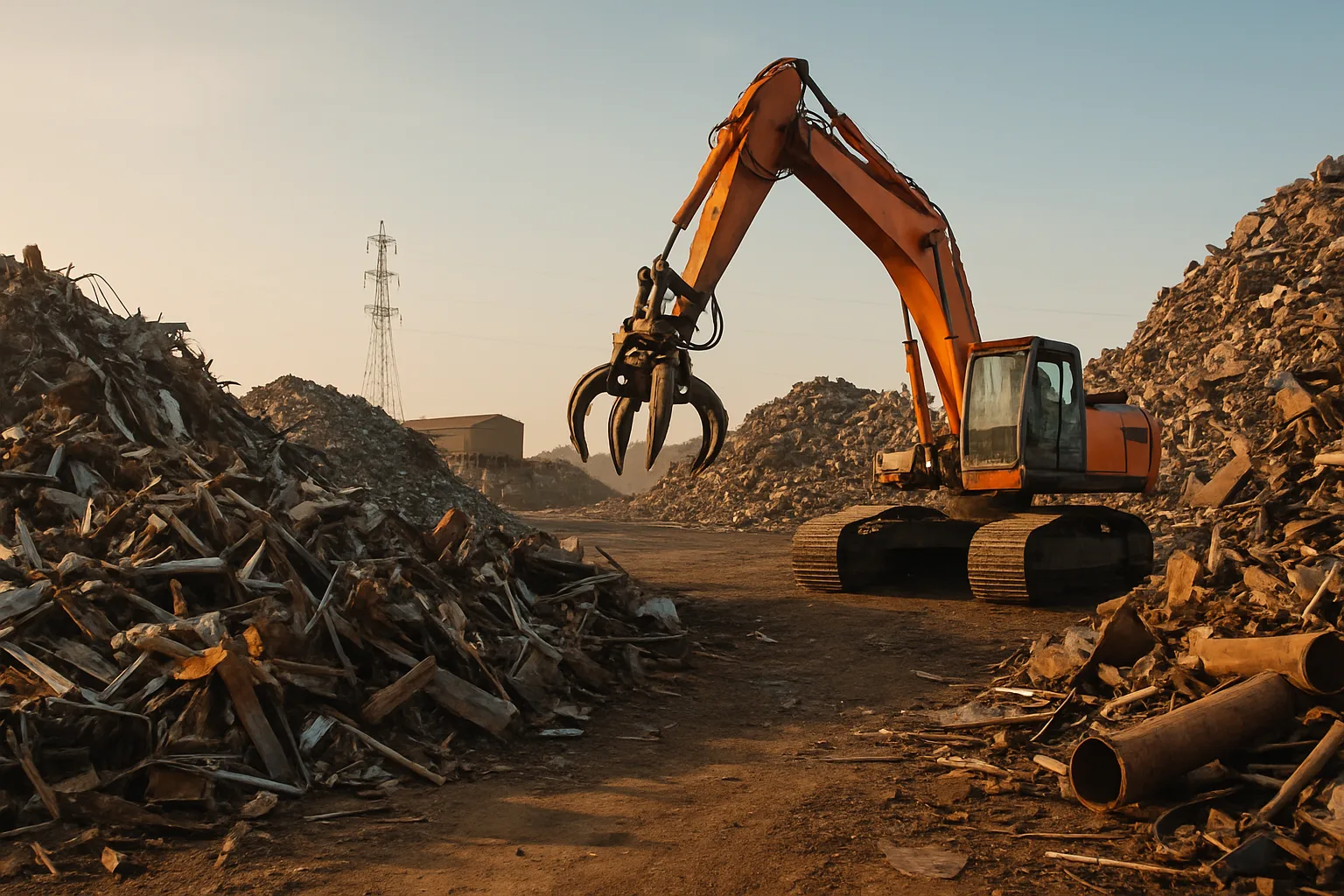
Saskatchewan's oil patch doesn't just produce energy — it produces mountains of scrap metal. Pipe, casing, pumping units, separator tanks, wellhead equipment, skids, and more. When an oil field operation shuts down or scales back, the leftover iron doesn't disappear on its own. It sits. It rusts. It becomes somebody's problem.
That's where this story starts.
We're not going to give you a feel-good puff piece. We're going to walk you through a real-world scenario that plays out regularly across rural Saskatchewan — oil field and industrial scrap piling up, no clear path to move it, and what happens when someone finally calls the right people.
If you've got scrap sitting on a lease site, a yard, a farm, or an industrial property near Regina or anywhere across the province, keep reading. This one's for you.
---The Problem: Industrial Scrap With No Exit Plan
Picture a mid-sized oil field operation in southeast Saskatchewan. The lease is winding down. The operator has a mix of steel pipe, old pump jacks, separators, tanks, cable, and copper-bearing electrical components scattered across two or three sites. Some of it's been sitting since the last downturn. None of it's generating revenue. All of it needs to go.
This is not a hypothetical. This scenario repeats itself constantly across the province — from the Weyburn area down to Estevan, and north toward Kindersley and beyond. The challenge isn't finding scrap. It's finding a buyer with the capacity to handle industrial volumes, the logistics to get out to a remote site, and the pricing transparency to make the deal worth doing.
Most operators in this position try one of two things. They call a local yard and take whatever price they're quoted. Or they let the scrap keep sitting because dealing with it feels like more work than it's worth. Neither outcome is good. That's exactly the gap that scrap metal pick up across Saskatchewan through SMASH is built to fill.
What an Oil Field Scrap Load Actually Looks Like
Industrial and oil field scrap is not a single commodity. It's a mix, and the mix matters — a lot — when it comes to your payout. Understanding what you've got before you make a call puts you in a much stronger position.
Here's a breakdown of what typically comes off a lease site:
- Steel pipe and casing: High volume, lower per-pound value, but the weight adds up fast. A single load of steel pipe can run tens of thousands of pounds.
- Pump jacks and pumping units: Heavy steel, often with motor components. The motors may contain copper windings — that's where your value spikes.
- Separator tanks and pressure vessels: Cleaned-out tanks are valuable scrap steel. They need to be properly decommissioned before pick up — this is non-negotiable for safety and compliance.
- Electrical cable and wire: Copper-bearing and often overlooked. Stranded copper cable, control wire, and armoured cable can add real dollars to a load. SMASH pays top dollar for copper-bearing products — that's not filler language, it changes the math on a job.
- Skids and structural steel: Fabricated steel frames, access platforms, pipe supports. Heavy, awkward to move, but straightforward scrap.
- Instrumentation and electrical panels: Mixed metals. Often contain aluminum, copper, and steel together. Worth separating if the volume is there.
- Used oilfield tubulars (UOT): A specific category with its own grading. Condition matters.
The point here isn't to overwhelm you. It's to make clear that a lease site cleanup is not a one-item job. When you bring volume like this to the table, you have leverage — and you should use it. Platforms like SMASH make it easier to put that leverage to work through competitive pricing and vetted buyers who understand industrial loads.
Farm Scrap Pick Up Regina Region: The Cross-Over You Didn't Expect
Oil field scrap and farm scrap pick up Regina region have more in common than most people realize. Both involve rural properties, large equipment, remote access challenges, and mixed metal loads. A farmer south of Regina who's been holding onto an old combine, a grain auger, and a pile of irrigation pipe is dealing with the same basic logistics problem as a lease operator with a yard full of pipe and skids.
In both cases, you need someone who:
- Can actually get to you — rural routes included
- Has the equipment to handle bulk and heavy loads
- Pays fairly without making you feel like you're negotiating blind
- Handles the paperwork (bills of lading, packing lists, documentation) so you don't have to chase it down
That overlap is why SMASH built its service the way it did. Whether you're in Regina, an hour outside the city, or on a farm road that isn't on most GPS maps, we route accordingly. For qualifying loads — bulk scrap, multiple vehicles, trade volumes of non-ferrous, farm cleanups — smashrecycling.ca — free pick up for qualifying loads is the place to start.
Not sure if your load qualifies? Call 1-855-SMASH-74 and describe what you've got. No pressure. No guessing.
How the SMASH Approach Changes the Outcome on Industrial Jobs
Here's where we get into the part that matters most: what actually changes when you use a competitive, transparent process instead of the old single-buyer phone call.
The old way: You call one yard. They give you a number. You have no idea if it's market rate. You take it because you don't have time to shop around, or because you've always dealt with the same buyer. The scrap moves, but you walk away wondering if you left money on the table.
The SMASH way: Your load gets documented — photos, weights, metal types, location. Vetted buyers who handle industrial volume see what you've got. They compete. You get pricing that reflects actual market demand, not one buyer's preferred margin. And because everything is documented upfront, there are no surprises at the scale or disputes over what was in the load.
On an industrial job, that difference is significant. We're not inventing numbers here — we won't do that. But when you're moving thousands of pounds of mixed metals, the spread between a single quote and competitive pricing can be meaningful. Competition reveals the market. That's not a slogan. It's how pricing works.
For a detailed look at how the process works step by step, read scrap metal pick up guides for Saskatchewan — there are practical breakdowns for everything from single-vehicle removal to farm equipment cleanups.
What Happens on Pick Up Day: Industrial Volume Done Right
One thing that stops operators from getting started is uncertainty about the logistics. What does pick up actually look like on a big job? Here's a straightforward rundown.
Before pick up:
- All tanks and vessels must be cleaned and degassed. No exceptions. This is a safety requirement, not a preference.
- Hazardous materials (asbestos insulation, mercury switches, hydraulic fluid) need to be identified and handled separately before scrap removal begins.
- Copper and non-ferrous materials should be separated from steel where possible — it simplifies sorting and speeds up your payout.
- Items need to be accessible. We don't enter private structures. Equipment should be in a yard, on a pad, or staged for loading.
On pick up day:
- Our team handles loading and hauling for qualifying loads.
- Weight tickets, bills of lading, and packing lists are generated and shared — no chasing paperwork.
- For Regina-area jobs and surrounding Saskatchewan locations, we route efficiently and communicate arrival windows.
After the job:
- Auto-invoicing through the SMASH platform means no manual billing headaches.
- Payment reflects the documented load, no surprises.
For Regina scrap metal services, the same process applies whether it's a single appliance or a multi-site industrial cleanup — though single small items may carry a pickup fee. Bulk and commercial loads are where the free pick up for qualifying loads applies. When in doubt, call first and describe your load.
Appliance Pick Up Regina: It Starts Smaller Than You Think
Not every job starts with a lease site. Some of the operators and tradespeople who eventually bring SMASH large industrial loads first made contact over something much smaller — an appliance pick up Regina job, an old water heater from a rental property, or a pile of copper pipe from a renovation.
That first interaction matters. If the process is smooth, transparent, and actually shows up when it says it will, you build trust. And when a bigger job comes along — say, an oil field cleanup or a farm equipment haul — you already know who to call.
For homeowners and landlords in Regina dealing with old appliances, the same rules apply: items must be accessible and outside or in an accessible garage. Single appliances may have a pickup fee depending on location and volume. Trades dealing with renovation scrap — old appliances, copper wire, aluminum duct — often qualify for free pick up on volume jobs. Schedule your scrap metal pick up in Saskatchewan and get the conversation started.
Frequently Asked Questions
Q: Is appliance pick up in Regina always free?
Free pick up applies to qualifying loads — bulk scrap, multiple items, commercial volumes, or trade quantities of non-ferrous metal. A single appliance may carry a pickup fee depending on your location. If you're a landlord clearing multiple units or a contractor pulling out several old appliances, there's a better chance your load qualifies. Call 1-855-SMASH-74 and describe what you've got before assuming either way.
Q: How do I know if my oil field or industrial scrap load qualifies for free pick up?
Industrial and oil field scrap almost always qualifies — the volume alone typically meets the threshold. The key requirements are that materials are accessible (staged in a yard or on a pad), tanks and vessels are cleaned and degassed, and hazardous materials are dealt with separately. Contact us with a rough inventory of what you have and we'll confirm pickup logistics from there.
Q: What Regina-area scrap metal does SMASH pay the most for?
Copper-bearing materials consistently command the highest prices — copper wire, copper pipe, electrical cable, motor windings, and copper-bearing cable from trades and oil field work. Aluminum and stainless steel also carry strong non-ferrous premiums. Steel and iron pay by weight and are lower per pound, but add up quickly on large loads. Separating your metals before pick up is the simplest way to maximize your payout.
Q: Can you pick up scrap from rural Saskatchewan — not just Regina?
Yes. Rural and remote Saskatchewan is a core part of what we do. Farm equipment cleanups, oil field lease sites, grain bins, irrigation pipe, and old vehicles are all jobs we handle outside the city. The further you are from Regina or Saskatoon, the more important it is that you have a qualifying bulk load — call ahead and we'll work out routing that makes sense for both sides.
Q: How does a scrap metal auction platform like SMASH differ from just calling a local yard?
A local yard gives you one number and you take it or leave it. A competitive auction platform puts your documented load in front of multiple vetted buyers. More buyers means better price discovery — you find out what your scrap is actually worth in the current market, not just what one buyer feels like paying that day. For large industrial or farm loads, the difference in outcome can be significant.
Got scrap sitting on a lease site, a farm, or a Regina-area property? The longer it sits, the less you get for it — rust eats weight, and weight is money. Reach out, describe your load, and let's get it moving. Scrap metal pick up across Saskatchewan for qualifying loads, trades welcome, and top dollar for copper — call 1-855-SMASH-74 or visit scrap-metal-pick-up.com. The phone call costs nothing.
Stay current on scrap metal markets and pick up updates — follow SMASH on LinkedIn at linkedin.com/company/scrap-metal-auction-sales-hub for industry insights and service news across North America.