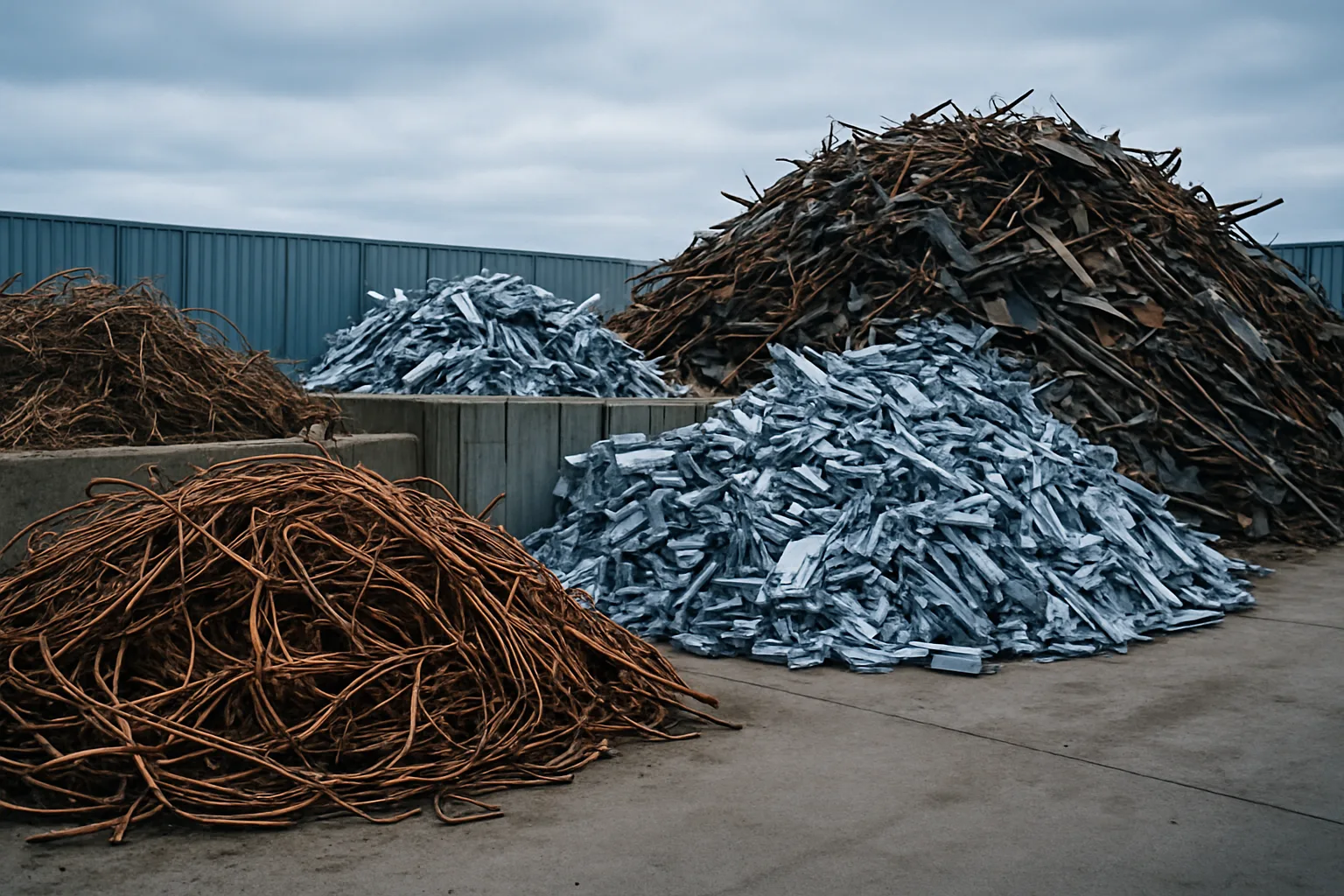
Saskatchewan's commercial and industrial sectors generate more scrap metal than most operators realize — and most of it is sitting idle, costing space and creating liability instead of generating returns.
Whether you're running a Regina-based fleet, a processing facility outside Saskatoon, or an oil field operation in the northwest corner of the province, 2026 is a different scrap landscape than it was even a few years ago. Regulatory expectations around material documentation are tightening. Buyer networks are consolidating. And the old model of calling one buyer, taking whatever price they quote, and hoping the truck shows up — that model is getting more expensive to rely on.
This isn't theoretical. Commercial and industrial operators across Saskatchewan are leaving real money on the table every time they sell a load without competition. Platforms like SMASH exist specifically to fix that. But before we get there, let's talk about what's actually happening on the ground in 2026 for commercial and industrial scrap operations — and what it means for your bottom line.
What's Changed for Commercial Scrap in Saskatchewan in 2026
Scrap metal regulation in Canada has been evolving steadily, and Saskatchewan operations are not exempt. Municipal and provincial record-keeping expectations for commercial scrap transactions have tightened — particularly around vehicle identification, serial-numbered components, and high-value non-ferrous material like copper. If you're running fleet vehicles through your yard, recycling industrial equipment, or processing copper-bearing materials from oil field decommissioning, documentation isn't optional anymore. It's how you protect yourself.
Commercial buyers in Saskatchewan increasingly want packing lists, photo documentation, and weight tickets before they bid. That's a shift from informal verbal agreements. Operators who show up to a transaction without organized documentation are getting lower bids — not because the metal is worth less, but because unverified loads carry more risk for buyers. Organized documentation gives buyers confidence. More buyer confidence means stronger bids.
On the regulatory side, 2026 has also brought renewed attention to vehicle deregistration and end-of-life vehicle (ELV) processing requirements. Yards and commercial operators handling scrap car removal in Regina and surrounding areas need to confirm title, VIN documentation, and in some cases proof of decommissioning before a vehicle moves. Know the requirements before your load gets staged — the paperwork is easier to assemble upfront than to chase down after the fact.
Cash for Scrap Cars Regina: What Commercial Fleets Are Actually Getting
The term "cash for scrap cars Regina" gets searched most often by individual vehicle owners, but the real volume — and the real money — sits with commercial fleet operators. A municipality retiring a pool of service trucks, a construction company cycling out older equipment, an HVAC business with a fleet of worn vans: these aren't one-car transactions. They're bulk loads, and bulk loads have leverage.
That leverage only works if you use it. A single call to a single buyer gives you one number. You take it or you don't. There's no way to know whether that number reflects the actual market on that day, for that material, in that condition. Schedule scrap metal pick up through SMASH and you're putting that load in front of multiple vetted buyers simultaneously — which is how price discovery actually works.
For commercial operators in Regina specifically, the math matters. A fleet of eight to ten end-of-life vehicles can represent a meaningful scrap return if the sale is structured properly — bulk weight, non-ferrous components separated, fuel systems drained, and documentation in order. The difference between an organized commercial lot and a disorganized one isn't just administrative. It reflects directly in the final number.
- Ferrous (steel, iron): Bulk pricing per ton — fleet vehicles contribute primarily here
- Non-ferrous (copper, aluminum, brass): Priced per pound — wiring harnesses, radiators, and catalytic converters add up fast in fleet volumes
- Catalytic converters (cats): Tracked individually by VIN or serial number — require documentation in commercial transactions
- Cores: Starters, alternators, and other remanufacturable components may carry separate core value
Know what you have before you call. A basic inventory of your fleet scrap load takes an hour and can change the conversation entirely.
Industrial and Oil Field Scrap Removal Across Saskatchewan
Outside of Regina, some of the highest-volume commercial scrap in the province comes from oil field decommissioning, agricultural equipment retirement, and industrial facility cleanouts. This is where scrap metal pick up across Saskatchewan becomes genuinely different from urban scrap removal — distances are real, access requires planning, and load volumes can be substantial.
Oil field operators retiring equipment — wellhead components, pipe, tanks, pump jacks — are dealing with scrap that's often mixed, partially contaminated, and spread across remote sites. The logistics complexity is real. But so is the material value, particularly for steel pipe and any copper-bearing electrical infrastructure on site. Free pick up for qualifying loads applies here: bulk industrial volumes, commercial quantities of non-ferrous, and multi-vehicle lots from fleet retirements all typically qualify.
Agricultural operations across rural Saskatchewan face similar logistics but different material types. Old combines, grain bins, swathers, augers, and generations of accumulated yard metal represent ferrous weight that adds up fast. A single decommissioned combine can run several thousand pounds of steel. A row of grain bins can represent a multi-ton ferrous load with aluminum and galvanized steel mixed in. SMASH connects these rural loads with buyers who understand what the material actually is — not buyers guessing at value sight-unseen.
Key material categories for Saskatchewan industrial and agricultural scrap:
- Heavy steel (structural, pipe, equipment frames)
- Aluminum (bins, panels, agricultural components)
- Copper wire and cable (oil field electrical, farm shop wiring)
- Stainless steel (food processing, dairy, specialty ag equipment)
- Cast iron (engine blocks, industrial machinery)
- Mixed non-ferrous from decommissioned HVAC and electrical systems
Free Scrap Pick Up Regina: Who Actually Qualifies and What to Expect
Let's be direct about free scrap pick up Regina and what it actually means for commercial operators. Free pick up applies to qualifying loads — that's bulk scrap, commercial volumes of non-ferrous, multiple vehicles, farm equipment lots, or trade quantities of copper-bearing materials. It does not mean one appliance at the curb or a single small item.
For a commercial or industrial operator, qualifying is rarely the issue. A fleet retirement, a facility cleanout, a contractor's accumulated copper wire from a job site — these are exactly the loads that make pick up logistics work for everyone. The truck runs, the load is worth the trip, and the transaction makes sense on both sides.
What commercial operators should have ready before pick up:
- Basic inventory list — material types, estimated weights, number of vehicles if applicable
- Vehicle documentation — titles or registration for scrap vehicles, VINs accessible
- Photo documentation — photos of the material as staged helps buyers understand what they're bidding on
- Site access details — confirm the load is outside, accessible, and ready to move (we do not enter private homes or occupied structures)
- Catalytic converter serials — if cats are in the load, serial tracking is expected in 2026
Organized loads move faster and attract stronger bids. That's not a sales pitch — it's how the mechanics of scrap buying actually work. Read scrap metal pick up guides for Saskatchewan to see how other operators are staging and documenting their loads before pick up.
Why Competitive Bidding Matters More for Commercial Volumes
The case for competitive bidding gets stronger as load volume increases. On a single vehicle, the difference between one buyer's price and the market might be modest. On a 20-ton commercial load of mixed ferrous and non-ferrous? That difference is real money.
Single-buyer pricing for commercial scrap in Saskatchewan has historically meant the buyer sets the terms. They know the market. You don't. They know what your material is worth at the mill that week. You're guessing. That information gap is where operators lose margin — not because anyone is acting dishonestly, but because one price is one price. Competition reveals the actual market.
Platforms like SMASH flip that dynamic. Vetted buyers see your documented load and bid against each other. You see what the market actually offers for your specific material on that specific day. You're not guessing. More buyers mean better price discovery — that's not a promise of higher prices every time, but it's a structurally better way to sell than taking the first offer from the one buyer you called. Schedule your scrap metal pick up in Saskatchewan and put your load in front of the market, not just one buyer's opinion of it.
Commercial operators with recurring volume — quarterly facility cleanouts, annual fleet retirements, ongoing oil field decommissioning work — benefit the most from building a repeatable, documented process. Once your first load is staged and sold through a competitive process, the second one takes a fraction of the time. The inventory process becomes routine. The documentation is already templated. And you stop guessing what your scrap is worth.
What Regina and Saskatchewan Commercial Operators Should Do Right Now
If you're sitting on a commercial or industrial scrap load — vehicles, equipment, bulk non-ferrous, or mixed ferrous from a facility — here's what matters in 2026:
- Document before you sell. Photo everything. Build a basic packing list. Know your VINs.
- Don't accept the first price from a single buyer on a large load. Competition exists. Use it.
- Confirm your regulatory obligations for vehicle deregistration and component tracking before the load moves.
- Separate your non-ferrous from your ferrous where possible — buyers pay better for sorted loads.
- Engage a platform with vetted buyers, not just the closest yard's phone number.
If you're in Regina, start with Regina scrap metal services to understand what's available locally. If you're outside the city — rural Saskatchewan, oil patch, northern ag operations — bulk pick up for qualifying loads is available across the province. The distance is manageable when the load is worth the trip.
If your operation generates commercial or industrial scrap on any regular basis, don't leave it to chance. Get organized, get competitive bids, and stop treating scrap as an afterthought. It's a revenue line, not a disposal problem. Scrap metal pick up across Saskatchewan is available for qualifying loads — trades welcome, top dollar for copper-bearing products. Call 1-855-SMASH-74 or visit scrap-metal-pick-up.com to get started.
Frequently Asked Questions
Q: How does cash for scrap cars Regina work for commercial fleet operators?
Commercial fleet operators in Regina can stage multiple end-of-life vehicles, document VINs and titles, and sell the lot as a bulk load rather than individually. Bulk fleet sales attract stronger bids because buyers can price the load more confidently. Competitive auction-style platforms like SMASH put your documented fleet lot in front of multiple vetted buyers simultaneously, which is structurally better than a single phone call to one yard.
Q: Does free scrap pick up in Regina apply to commercial loads?
Free pick up for qualifying loads applies when the volume justifies the trip — commercial fleet vehicles, bulk non-ferrous from trade jobs, farm equipment lots, and industrial facility cleanouts typically qualify. Single items or very small loads may involve a pick up fee; drop-off at a yard is an alternative for small quantities. All material must be outside and accessible — we do not enter private homes or occupied structures.
Q: What documentation do I need for commercial scrap car removal in Regina?
In 2026, commercial vehicle scrap transactions in Saskatchewan require vehicle titles or registration confirmation, accessible VINs, and serial tracking for catalytic converters. Photo documentation of the load and a basic packing list help buyers bid confidently and can improve your final price. Have your paperwork organized before the truck arrives — it speeds up the transaction and protects you from liability on deregistration.
Q: Can I get scrap pick up for oil field equipment in rural Saskatchewan?
Yes — bulk industrial loads including oil field pipe, wellhead equipment, structural steel, and copper-bearing electrical infrastructure qualify for pick up across Saskatchewan including rural and remote sites. Distance is a factor in logistics, so bulk volumes make the trip viable for both parties. Contact us with your site location and a rough inventory of material types and weights to confirm pick up availability.
Q: Why should I use a competitive bidding platform instead of just calling my local scrap yard?
Your local yard gives you one price — their price, on their terms. A competitive bidding platform puts your documented load in front of multiple vetted buyers, which reveals what the market actually offers for your material that day. On large commercial or industrial loads, the difference between one bid and a competitive process can be meaningful. More buyers means better price discovery — that's especially true for bulk non-ferrous loads like copper wire or sorted aluminum.
Follow SMASH on LinkedIn for industry updates, scrap metal market insights, and recycling news across North America.