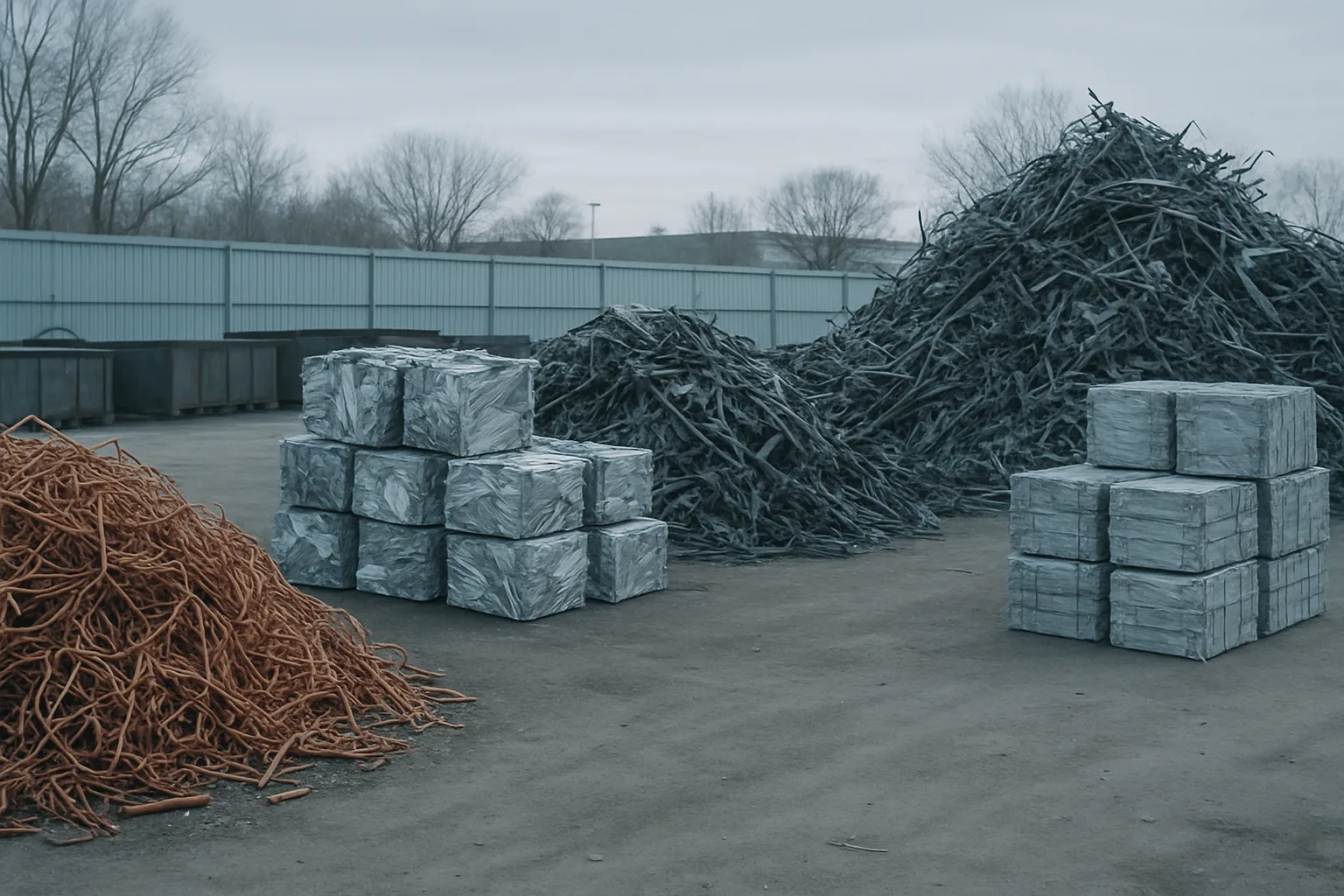
What's Actually Worth Money on a Saskatchewan Farm or Acreage
Most farmers sitting on a yard full of old equipment don't realize they're also sitting on thousands of dollars in recoverable metal. That rusted-out combine by the treeline? The pile of copper irrigation wire behind the shop? The three dead half-tons parked in the dugout pasture? All of it has value — some of it serious value — if you know what you're looking at and who to call.
Saskatchewan farms and acreages accumulate scrap differently than city properties. Decades of machinery, irrigation systems, fuel tanks, bins, and vehicles pile up because hauling it out felt like more trouble than it was worth. In 2026, that's no longer a good reason to leave money on the ground. Platforms like SMASH Recycling have changed how farm scrap moves — connecting sellers to vetted buyers, creating competition, and making scrap metal pick up across Saskatchewan straightforward for qualifying farm loads.
Here's a breakdown of what's actually worth money on your property and how to think about sorting it before the truck arrives.
Copper: The Most Valuable Metal You'll Find on a Farm
Nothing on a typical Saskatchewan farm beats copper for value per pound. Copper wire, copper pipe, copper fittings, and copper-bearing electrical components all command premium pricing at the yard — and farm properties tend to accumulate copper in ways most people don't track closely.
Where does it come from? More places than you'd expect:
- Irrigation systems — older drip and pivot systems used copper tubing extensively
- Electric motors — grain augers, bin aeration fans, pump motors, and shop compressors all contain copper windings
- Old wiring — barn and shop electrical tearouts often produce significant copper wire volume
- Pressure washers, water pumps, and heat exchangers — copper components throughout
- Transformers and ballasts — particularly from older farm outbuildings
Copper grades matter. Clean bare bright copper wire is worth significantly more than insulated wire or contaminated copper. If you're a tradesperson doing rural electrical work, strip and sort your wire before calling — that extra step translates directly into higher payment. We pay top dollar for copper-bearing products from trade jobs and farm cleanups. Electricians, HVAC technicians, and plumbers working acreage and rural properties across Saskatchewan consistently get better returns when they bring sorted loads.
Scrap Vehicles and Machinery: Heavy Iron That Adds Up Fast
Steel is the workhorse of farm scrap by volume. A single dead combine can weigh 15,000 to 25,000 pounds. A grain truck, a swather, a loader tractor — these aren't small numbers. Steel pricing fluctuates, but the sheer weight of farm equipment means even modest per-pound pricing adds up to meaningful dollars when you're clearing a full yard.
If you have dead vehicles sitting on your property — old half-tons, grain trucks, or utility trucks — those qualify for scrap car removal and same-day pickup in many cases depending on your location relative to our routes. Vehicles with intact catalytic converters can carry additional value, since cats contain platinum-group metals (PGMs) that trade on their own market. Platforms like SMASH handle catalytic converter auction processes that ensure those metals get properly valued rather than guessed at.
Common sources of heavy scrap on Saskatchewan farms and acreages include:
- Combines, swathers, and header equipment
- Grain trucks and farm trucks with expired plates
- Old tractors — both operational and non-operational
- Cultivators, discs, and tillage equipment
- Grain augers and conveyors
- Loader buckets, forks, and attachments
- Old fuel tanks (must be drained and purged — ask us about requirements)
- Steel grain bins and bin rings
For Regina-area farms or acreages within range of the city, Regina scrap metal services can be coordinated for larger farm loads. If you're further out — in the Weyburn corridor, the Qu'Appelle Valley, or out toward Swift Current — we run rural routes for qualifying loads. The key word is qualifying: bulk volume makes pickup economical for everyone.
Non-Ferrous Metals Beyond Copper: Aluminum, Brass, and Stainless
Copper gets the most attention, but non-ferrous metals on a farm extend well beyond copper wire and pipe. Aluminum, brass, and stainless steel all carry pricing well above steel scrap, and farms tend to have more of these metals kicking around than people realize.
Aluminum shows up in:
- Irrigation pipe — many prairie irrigation systems used aluminum pipe extensively through the 1980s and 90s
- Grain bin ladders, roof vents, and aeration covers
- Old truck wheels and rims
- Alloy engine blocks and transmission cases
- Aluminum wiring from older farm buildings (different value than copper wire — sort separately)
Brass accumulates in plumbing fittings, valves, and connectors throughout older farm shops and outbuildings. Brass taps, gate valves, pressure fittings — these are often tossed into a miscellaneous pile and forgotten. Sorted brass commands a strong price and doesn't weigh much, so it's worth pulling these pieces out and keeping them separate.
Stainless steel from dairy operations, processing equipment, or commercial kitchen teardowns on acreage properties can also bring in strong returns. Grade matters with stainless — mixed or contaminated stainless gets downgraded, so keep it clean and separate from regular steel.
Farm Cleanups That Qualify for Free Scrap Metal Pick Up
Let's be direct about how this works: not every load qualifies for free pick up. A single washing machine or one old tire-and-rim doesn't. But a farm cleanup with multiple dead vehicles, a pile of non-ferrous metals, bins, and heavy machinery? That's exactly what qualifies.
Qualifying loads generally include:
- Multiple scrap vehicles (2 or more cars, trucks, or farm vehicles)
- Full yard cleanups with a mix of ferrous and non-ferrous
- Trade quantities of copper wire or pipe from electrical, plumbing, or HVAC jobs
- Heavy machinery and equipment in bulk
- Commercial or oilfield scrap in volume
One thing to know before scheduling: items need to be accessible. We don't enter private residences. Everything needs to be outside, in a garage, in a yard, or staged for loading — not buried under other material or in a collapsed building. On a farm, that usually isn't a problem. Most of what needs to go is already outside.
If you're dealing with a smaller load, drop-off is often the better move. Bring it to a yard and avoid a pickup fee. But if you're sitting on a serious accumulation — the kind most Saskatchewan farms develop over 20 or 30 years of operation — a scheduled pickup for a qualifying load is the right call. Read scrap metal pick up guides for Saskatchewan to understand what qualifies and how to stage your load for maximum payout.
How to Sort Your Farm Scrap Before Pickup (And Why It Matters)
This is where most people leave money on the table. Mixed loads get downgraded. If your copper wire is bundled with steel conduit, your non-ferrous metal gets priced like mixed scrap instead of at its true value. Sorting isn't complicated, but it's the single most impactful thing you can do to increase what you get paid.
A simple farm scrap sorting system:
- Ferrous pile — anything magnetic: steel equipment, iron castings, old bins, structural steel, sheet metal
- Aluminum pile — irrigation pipe, rims, engine castings (keep clean)
- Copper pile — wire, pipe, fittings (strip insulation if possible, or at least separate bare from insulated)
- Brass pile — valves, fittings, taps
- Vehicles separate — stage dead vehicles away from the metal pile so they can be weighed and valued independently
- Cats separate — if you have catalytic converters from vehicles, keep them separate and let us know — they get handled through a different valuation process
Even a rough sort makes a real difference. You don't need to be perfect. You just need to keep the high-value stuff away from the low-value stuff so it doesn't get averaged down.
SMASH works with buyers who value transparency and documentation. When loads are sorted, photographed, and properly described, competition drives better price discovery. That's the core of how the SMASH model works — more buyers seeing a well-documented load creates more competition, and more competition means better outcomes for the seller. No subscription fees. We only win when you win.
Ready to Clear Your Farm or Acreage? Here's How to Get Started
Clearing decades of accumulated scrap off a Saskatchewan farm or acreage doesn't have to be a logistics nightmare. The first step is a simple inventory — walk your property and note what you have: vehicles, non-ferrous metals, heavy equipment, bins, and anything copper-bearing. If you've got volume, you likely qualify for a scheduled pickup.
Farms near Regina can often get faster service depending on load size and route timing. Scrap car removal in Regina is a consistent part of our operation — if vehicles are part of your cleanup, we handle those as part of the load assessment. Rural routes throughout Saskatchewan run regularly for qualifying farm cleanups, oilfield scrap, and large acreage cleanouts.
When you're ready to move, schedule your scrap metal pick up in Saskatchewan and we'll assess your load, confirm pickup timing, and get things moving. No pressure, no runaround.
Got a large farm cleanup with a mix of metals, old equipment, and scrap vehicles? Reach out directly to jeff@smashscrap.com with details about your load. That's the fastest route to getting a proper assessment and a pickup that works for your operation.
Scrap metal pick up across Saskatchewan for qualifying loads. Trades welcome — top dollar for copper. Call 1-855-SMASH-74 or visit scrap-metal-pick-up.com. If you're clearing a farm or acreage and you want to know what your scrap is actually worth, let's talk.
Frequently Asked Questions
Q: How do I know if my farm scrap load qualifies for free pick up in Saskatchewan?
Qualifying loads are generally bulk volumes — multiple scrap vehicles, large equipment, full farm yard cleanouts, or trade quantities of copper and non-ferrous metals. A single item or small load typically doesn't qualify for free pickup, but drop-off at a nearby yard is always an option. Contact us with a description of your load and we'll tell you straight.
Q: What's the most valuable scrap metal on a typical Saskatchewan farm?
Copper consistently brings the highest price per pound — copper wire, pipe, fittings, and motor windings all carry strong value. Aluminum irrigation pipe and brass fittings also deliver solid returns. Steel and iron are valuable by weight because of the sheer volume farms accumulate. Vehicles with intact catalytic converters carry additional value through the PGM content in the cat.
Q: Can I get scrap car removal in Regina on the same day I call?
Same-day scrap car pick up in Regina depends on load size, route scheduling, and vehicle accessibility. Single vehicles may require a scheduled appointment rather than same-day service. Multiple vehicles or vehicles being picked up as part of a larger farm cleanup may qualify for faster scheduling. Call 1-855-SMASH-74 to check current availability.
Q: Do I need to drain oil or fluids from farm equipment before scrap pick up?
Fuel tanks need to be drained and purged before we can accept them — this is a safety and transport requirement. Engine oil and hydraulic fluid in machinery are handled differently and we can walk you through what's needed during the load assessment. When in doubt, ask us before pickup day so there are no delays on site.
Q: How does SMASH handle catalytic converter pricing for farm vehicles?
Catalytic converters from scrap vehicles contain platinum-group metals (PGMs) and are valued separately from the vehicle body. SMASH uses a transparent auction process for cats so they're priced based on actual market competition rather than a single buyer's guess. If your scrap vehicles have intact cats, let us know during the load assessment — it's worth documenting and handling properly.
Follow SMASH on LinkedIn for scrap metal market updates, industry news, and tips for getting more from your loads: linkedin.com/company/scrap-metal-auction-sales-hub