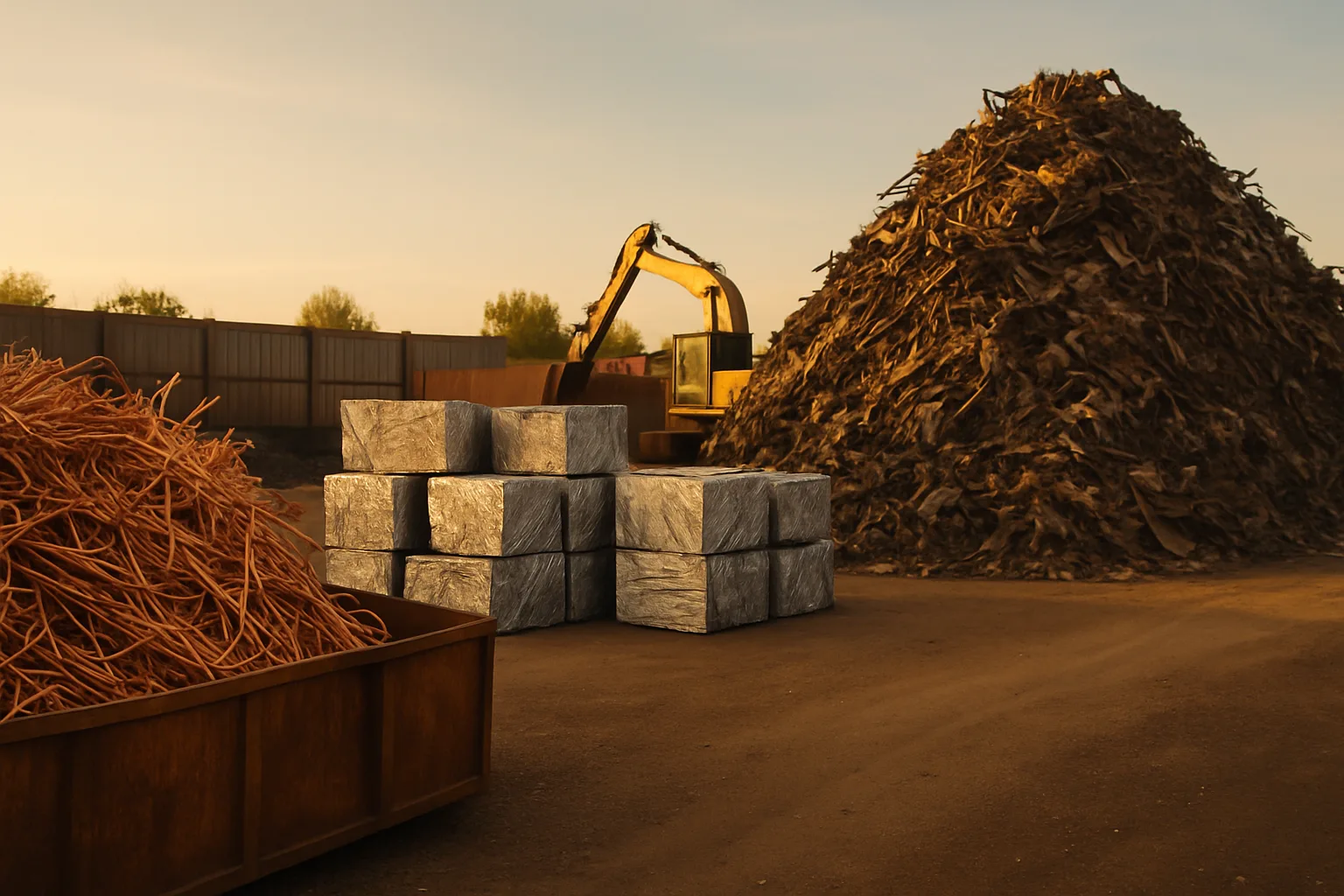
Most electricians in Saskatchewan finish a job, strip what copper they can, and toss the rest in a bin — hoping someone at the yard gives them a fair shake. That's the old way. And it's costing trades people real money every single time a load goes out the door. Scrap metal recycling Regina has quietly become a competitive market, and the electricians who understand that are getting significantly more for their copper wire, pipe, and cable than those who don't.
This week's roundup is built for the trades — electricians, plumbers, HVAC techs, and contractors across Saskatchewan who are hauling copper-bearing material regularly. If you're generating scrap from service calls, commercial buildouts, or renovation work, this is worth your time.
---The Copper Market in Saskatchewan — What Trades Should Know in 2026
Copper prices in 2026 have remained volatile, driven by continued global demand from EV manufacturing, grid infrastructure upgrades, and industrial construction. That's the macro picture. At the yard level, what matters more is how you present your load — and whether you're selling into competition or handing one buyer a monopoly on your price.
For Saskatchewan trades, the relevant grades are usually:
- #1 Bare Bright Copper — stripped wire, no insulation, no solder. The highest-paying grade.
- #2 Copper Wire — insulated wire or lightly contaminated bare. Still pays well.
- Copper Pipe (Type L or M) — from plumbing jobs. Clean pipe grades higher than fittings.
- Insulated Copper Cable — armoured cable, Romex, service entrance cable. Grade depends on insulation weight and copper content.
- Copper Transformers and Ballasts — typically sold as a mixed or low-grade copper, but volume matters here.
The difference between presenting clean, sorted copper versus a mixed pile of wire and fittings can be meaningful on a per-pound basis. Sorting takes time — but on a large commercial job, it's worth it. And if you're scheduling a scrap metal pick up across Saskatchewan, having your loads sorted and staged speeds up the whole process.
How Electricians and Plumbers Can Get Top Dollar for Copper Wire and Pipe
The single biggest mistake trades make with scrap copper is not knowing what grade they have before they walk into a yard. You show up with a mixed bin, the buyer grades the whole thing at the lowest common denominator, and you leave thinking you got a fair deal. You probably didn't.
Here's what experienced trades do differently:
- Strip wire on-site when it's efficient. Bare bright copper pays measurably more than insulated. For large commercial wire pulls, a good stripper pays for itself fast.
- Separate copper by grade before you haul. Keep bare copper, insulated cable, and copper fittings in separate containers. Don't mix grades into one bin.
- Weigh your loads before you go. Know your approximate weights. If you're regularly hauling 50–200 lbs of copper per week, that's a meaningful volume.
- Document your material. Photos, weight estimates, and grade descriptions give buyers more confidence — and platforms like SMASH Recycling — free scrap metal pick up across Canada use that documentation to attract competitive bids.
- Use competition. One buyer, one quote, take it or leave it — that's not a market. That's a guess. More buyers means better price discovery.
For Regina trades specifically, the yard landscape has more options than it did five years ago — but that doesn't mean every buyer is quoting competitively. If you're not creating competition around your load, you're leaving the pricing decision entirely in someone else's hands.
Scrap Metal Inventory Management: Why Trades Should Track Their Copper
This one sounds like extra work. It isn't — especially once it becomes a habit. Scrap metal inventory management for trades is simply keeping a running log of what you're pulling off jobs and what grade it is before it disappears into a mixed bin.
Why does it matter? Because when you approach a buyer — or list a load on a platform like SMASH — documented inventory gets better treatment. Buyers price uncertainty. If they don't know exactly what's in a load, they price low to protect themselves. If you show up with a packing list, weights, and photos, you've removed that uncertainty. And that removal shows up in the offer.
Practically speaking, here's a simple system for electricians on the go:
- Keep a notes app or a small logbook in the truck.
- After each job, log the copper type and estimated weight pulled.
- Take a quick photo of the bin before it goes on the truck.
- Total your load weekly before scheduling pickup.
This takes five minutes a day. Over a busy commercial season in Saskatchewan, it can meaningfully change the price discovery process. You're no longer guessing. You're presenting. That's a different conversation with a buyer entirely.
Free Scrap Metal Pick Up in Regina — What Qualifies for Trades
Let's be straight about how pickup works. Free pick up is available for qualifying loads — meaning bulk material, trade-volume copper, and commercial-scale scrap. A single bag of wire off one residential job doesn't qualify. That's a drop-off situation. But if you're an electrician generating steady copper from ongoing work, or a plumber finishing a commercial re-pipe, you likely do qualify.
For Regina scrap metal services, qualifying loads for free pickup typically include:
- 50+ lbs of copper wire or pipe in a single pickup
- Mixed non-ferrous loads from commercial jobs (copper, aluminum, brass)
- HVAC scrap including copper coils, line sets, and condensate components
- Old switchgear, transformers, or panel boards from electrical renovations
- Bulk cable pulls from commercial or industrial sites
Material needs to be outside and accessible — we don't enter private homes or businesses. Staging your copper in bins, on a pallet, or in your trailer makes pickup fast and simple. If you're running a crew on a large job in or around Regina, a scheduled pickup can be arranged to keep your site clean without breaking your workflow.
Not sure if your load qualifies? The best move is to schedule your scrap metal pick up in Saskatchewan and describe your load. You'll get a straight answer — no runaround.
HVAC and Plumbing Trades: Don't Overlook These High-Value Materials
Electricians get a lot of attention in the copper conversation — and for good reason. But HVAC techs and plumbers are sitting on serious value too, and it often goes undercaptured because the material type is less obvious.
For HVAC technicians, high-value scrap includes:
- Copper line sets and coils — these are high-content copper and pay well clean.
- Aluminum fin coils — a separate non-ferrous grade, worth sorting from the copper.
- Compressors — steel shell with copper windings inside. Sell whole or cracked open depending on volume.
- Brass fittings and valves — brass pays above steel, below copper. Don't mix it into steel scrap.
For plumbers, copper pipe from residential re-pipes, commercial jobs, or demo work adds up fast. A full residential re-pipe on an older home in Regina can yield 40–80 lbs of copper pipe. That's a meaningful load. Clean it, keep it separate from brass fittings, and you'll grade it out properly.
SMASH works with trades across Saskatchewan specifically because the material quality coming from job sites is typically consistent and documented — which makes competitive pricing easier and faster. No digging through mystery bins. No guessing games on grade.
Weekly Market Recap: What Saskatchewan Trades Should Watch Right Now
As of the week of August 23, 2026, here's the broad picture for non-ferrous scrap across Saskatchewan:
- Copper remains the highest-value common scrap metal for trades. Global demand from infrastructure and electrification projects continues to support prices, though week-to-week fluctuation is real.
- Aluminum prices have held relatively steady. HVAC coils and aluminum conduit are moving well.
- Brass is consistent — fittings, valves, and old fixtures from renovation jobs are worth separating and selling as brass, not as mixed metal.
- Steel and iron remain lower-value but relevant for trades hauling conduit, pipe, and structural material.
Disclaimer: Scrap metal prices fluctuate based on global markets, local supply and demand, and material grade. Always verify current rates before selling. Prices referenced here are general market context, not guaranteed quotes.
For the most current pricing in your area, the best approach is to get competing offers rather than relying on a single quote. That's exactly what platforms like SMASH are built to facilitate. More buyers, better price discovery — it's that simple.
Want to dig deeper into how this works? Read scrap metal pick up guides for Saskatchewan for practical breakdowns on pricing, sorting, and scheduling across the province.
---Frequently Asked Questions
Q: How much copper wire do I need to qualify for free scrap metal pick up in Regina?
Free pick up is available for qualifying loads — generally 50 lbs or more of copper wire, pipe, or mixed non-ferrous material from trade jobs. Smaller loads are better suited for drop-off. If you're unsure, describe your load when you reach out and you'll get a straight answer on whether pickup makes sense.
Q: What's the difference between #1 and #2 copper wire, and does it matter for pricing?
#1 bare bright copper is stripped, clean wire with no insulation, paint, or solder — it's the highest-paying grade. #2 copper includes insulated wire or wire with minor contamination. The price spread between grades is real, so it's worth stripping wire when it's efficient to do so. On large commercial pulls, the difference adds up.
Q: Can HVAC technicians get top dollar for copper coils and line sets in Saskatchewan?
Yes. Copper line sets and coils from HVAC jobs are high-content copper and grade well when kept separate from aluminum fin coils and steel components. Sorting your HVAC scrap before pickup or drop-off is the best way to ensure each material grades correctly and you get maximum value for each component.
Q: How does scrap metal inventory management help electricians get better prices?
Documenting your copper load — weights, grades, and photos — removes uncertainty for buyers. Buyers price uncertainty downward to protect themselves. When you show up with a clear packing list and sorted material, you're presenting a known commodity, not a mystery bin. That documentation directly supports better price discovery and faster transactions.
Q: Does scrap metal pick up in Regina work for ongoing trade accounts, not just one-time loads?
Absolutely. Trades running regular commercial work often benefit from scheduled recurring pickups. If you're generating consistent volumes of copper, aluminum, or mixed non-ferrous material from ongoing jobs in or around Regina, a recurring pickup arrangement keeps your site clean and ensures your scrap moves efficiently rather than piling up between hauls.
---If you're a tradesperson in Saskatchewan generating copper wire, pipe, cable, or mixed non-ferrous scrap from your work — you should be getting top dollar for it, not whatever a single buyer decides to offer. Scrap metal pick up across Saskatchewan is available for qualifying loads, trades are welcome, and copper-bearing material gets premium pricing. Call 1-855-SMASH-74 or visit scrap-metal-pick-up.com to get your load moving.
Follow SMASH on LinkedIn for weekly scrap metal market insights, trade tips, and industry updates: SMASH on LinkedIn.