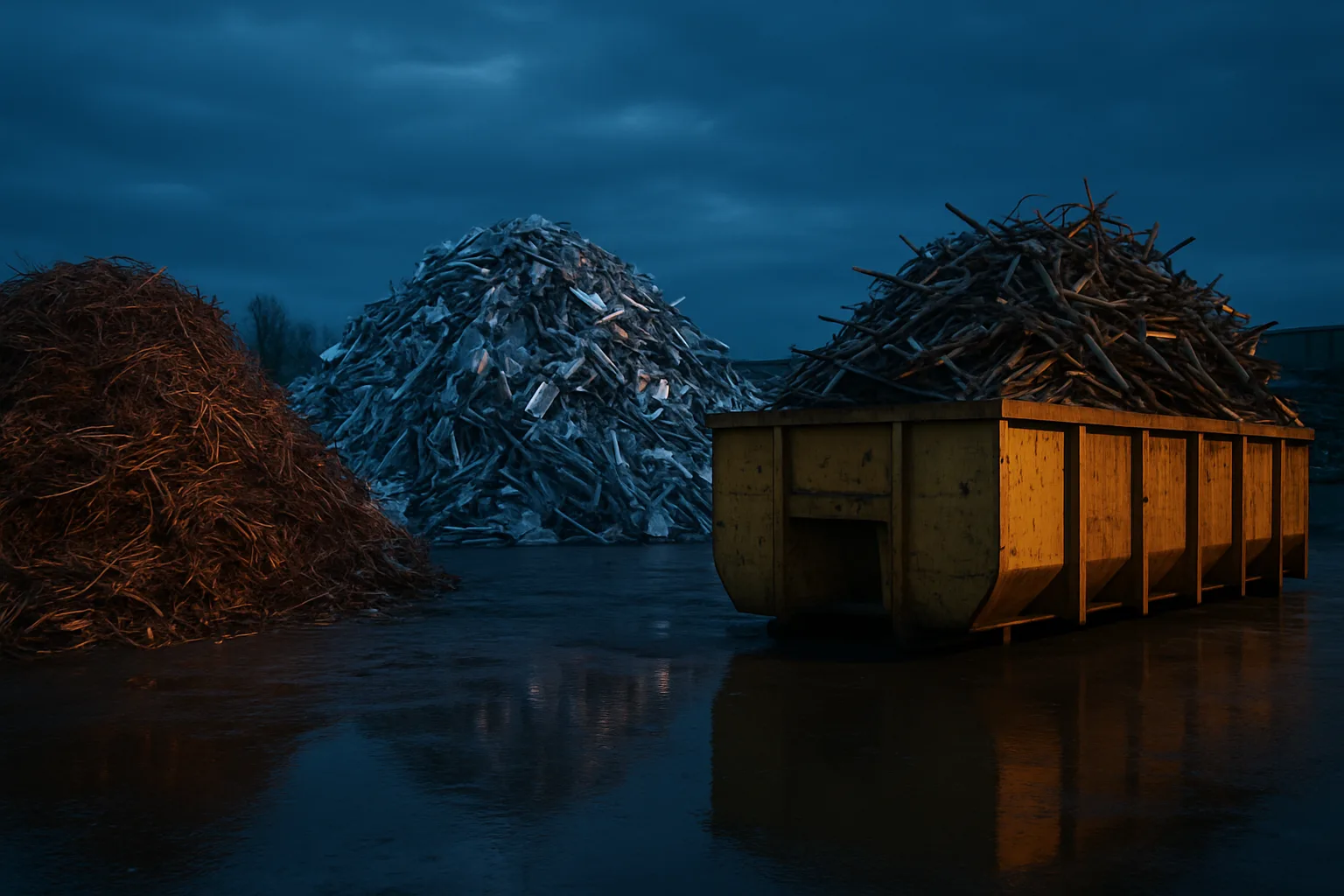
Saskatchewan has more old steel grain bins sitting empty than most people realize. Some have been standing since the 1970s. Some collapsed in a windstorm. Some were replaced when the operation scaled up. Either way, they're taking up yard space, becoming a liability, and not putting a dollar back in your pocket — yet.
This is a case study of what happens when you stop looking at old bins as a headache and start treating them as a steel asset. Whether you're on a quarter section outside of Regina or running a multi-site grain operation across Saskatchewan, the process of getting rid of old bins can be straightforward — if you know who to call and what to expect.
What Old Grain Bins Are Actually Worth as Scrap Steel
A single steel grain bin — depending on size, gauge, and condition — can weigh anywhere from a few thousand pounds to well over ten thousand pounds of raw steel. That's not nothing. Scrap steel prices fluctuate constantly, so we won't pin a number here, but the point is clear: there's real material value sitting on your property right now.
The problem is most farmers either don't know the bins have value or they assume hauling them away costs more than the metal is worth. That's a legitimate concern for single-bin situations, but it's rarely true when you're dealing with multiple bins, a full yard cleanup, or a combination of scrap metal types — steel bins, old equipment, wire, motors, and pipe.
- Corrugated steel panels from bins are clean, consistent scrap — easy to load and weigh
- Steel hoops and frames add to the total tonnage quickly
- Aeration fans and motors may contain copper windings — worth significantly more per pound than steel alone
- Copper wiring and cables connected to bin systems are non-ferrous and priced accordingly
- Old auger systems and conveyors tied to the bin setup may also qualify for pickup
When you add it all up — bins, associated equipment, wire, and motors — a full farmyard bin removal can represent a meaningful scrap load. That's where scrap metal pick up across Saskatchewan becomes worth your time to arrange properly, rather than hauling it yourself or letting it sit another decade.
The Old Way Farmers Deal With Bins (And Why It Wastes Money)
The traditional approach to getting rid of old bins goes one of three ways. You burn what you can, which doesn't work on steel. You hire a local guy with a torch who cuts it apart and hauls it to a single buyer at whatever price he decides. Or you leave it standing and deal with it "next year" — which turns into ten years faster than you'd think.
Calling one buyer and taking one price is the same broken model that costs yards and sellers money across every category of scrap. One buyer, no competition, no price discovery. You're guessing whether you got a fair deal. You probably didn't.
That's why platforms like list your scrap for pickup on SMASH Recycling exist — to put your material in front of vetted buyers who compete for it, rather than leaving you stuck with one quote from one person who has every incentive to lowball you. More buyers means better price discovery. That's not a sales pitch; it's just how markets work.
The other issue with the old way: no documentation. When bins get stripped casually with no inventory, no weights, no records, you have no way to verify what was hauled, what it weighed, or whether you were paid correctly. That's a problem on any size operation.
How Grain Bin Removal Actually Works for Qualifying Farm Loads
Free pick up for qualifying loads is available across Saskatchewan — including rural routes and farm properties. The key word is qualifying. A single small bin on its own may not meet the threshold for a free pickup run, depending on your location. But a full bin yard, multiple bins, or bins combined with other farm scrap almost always does.
Here's what a typical qualifying farm bin removal looks like:
- Contact us — describe what you've got: number of bins, approximate sizes, other scrap on site, and your location relative to the nearest highway or town.
- We assess the load — based on material type, volume, and your location, we confirm whether it qualifies for free farm scrap pick up Saskatchewan.
- Schedule the pickup — we coordinate a date. Items need to be accessible: outside, in a yard, or pulled apart enough to load. We don't enter private structures.
- We haul it out — panels, hoops, motors, wire, and any other scrap metal you want removed. One trip when possible, multiple runs for large volumes.
- You get paid or credited — settlement depends on material weights and current pricing. Non-ferrous components (motors, copper wire) are priced separately from steel tonnage.
For farmers near Regina, our Regina scrap metal services cover the surrounding area and rural routes. If you're further out, let us know your location and we'll work out the logistics. Saskatchewan is a big province. We cover it.
Copper-Bearing Components: The Most Overlooked Value in a Bin Yard
Most farmers think of grain bin removal as a steel play. That's fair — bins are mostly steel. But a lot of bin systems have copper-bearing components that are worth substantially more per pound than the steel surrounding them.
Aeration fan motors are the biggest one. Every powered grain bin has at least one. Those motors contain copper windings. If you're removing four or five bins, you could have four or five motors sitting there — each one worth more than it looks.
Beyond motors, look for:
- Electrical cable running to the bin system from your power source
- Control panels and wiring harnesses
- Copper pipe in any associated irrigation or heating systems
- Brass fittings on older equipment
We pay top dollar for copper-bearing products. That's not a throwaway line — non-ferrous metals command a premium, and trades (electricians, plumbers, HVAC technicians) who bring us copper wire, pipe, and cable in bulk get paid accordingly. The same logic applies to what comes off a farm bin system when it's properly inventoried.
Don't strip and discard the electrical components before the pickup. Leave them attached or set them aside labeled — they're worth separating and pricing correctly rather than mixing into a steel pile at a lower rate.
Scrap Car Removal in Regina: When the Bin Cleanup Turns Into a Full Yard Clear-Out
This is where farm cleanups tend to snowball — in the best possible way. You start calling about grain bins. Then you remember the 1998 pickup that hasn't moved in six years. Then there's the old combine header sitting in the bush. And the pile of steel pipe from when you re-did the water line. And the broken field cultivator that's been used as a parts donor for a decade.
All of that qualifies. Junk car removal Regina and surrounding areas is part of what we do — right alongside farm equipment, bins, and bulk scrap. Scrap car removal in Saskatchewan doesn't require the vehicle to run or even to be in one piece. Junk to go removal means we haul what you've got, not just what's convenient to move.
For a full yard cleanout near Regina, combining a bin removal with scrap vehicle pick up Saskatchewan makes the logistics easier and typically makes the load qualify faster for free pick up. The heavier and more diverse the load, the better it works for everyone.
If you're ready to stop walking past the same pile of scrap every day, read scrap metal pick up guides for Saskatchewan or schedule your scrap metal pick up in Saskatchewan and tell us what you've got.
What to Do Before the Pickup Crew Arrives
You don't need to dismantle everything yourself. But a few things make the process faster and help you get the most out of the visit.
- Separate non-ferrous from steel if you can — copper wire, motors, and brass in one pile; steel panels and frames in another. Mixed loads get priced at the lower metal's rate.
- Clear access — the pickup truck and trailer need to get within a reasonable distance of the material. If bins are in a tight yard, let us know ahead of time.
- Don't burn the wire — burning insulation off copper wire damages the metal and is illegal. We take insulated wire and pay for it.
- Have a rough inventory ready — number of bins, approximate sizes, plus any additional items you want hauled. This speeds up the assessment call.
- Ensure everything is accessible — items must be outside or in an open structure. We don't enter private homes or enclosed buildings.
A little prep goes a long way. The more organized the site, the faster we load and the more accurately the material gets weighed and sorted.
Frequently Asked Questions
Q: Is grain bin removal in Saskatchewan always free?
Free pick up is available for qualifying loads — typically multiple bins, bulk farm scrap, or bin removal combined with other scrap metal on site. Single small bins in remote locations may involve a fee depending on travel distance and load volume. Contact us with your location and what you've got and we'll give you a straight answer.
Q: Do you handle junk car removal in Regina alongside a farm cleanup?
Yes. Scrap car removal in Regina and surrounding areas is part of what we do. If you've got old vehicles on the property along with bins or equipment, we can often combine it into one pickup run. The larger the combined load, the easier it is to qualify for free pickup.
Q: What happens to my scrap steel after pickup?
Material is weighed, sorted, and processed through established recycling channels. Steel goes to steel, non-ferrous goes to non-ferrous. Nothing gets mixed in a way that loses you value — that's part of the reason proper inventory and separation matters.
Q: Do I need to dismantle the bins before you arrive?
Not necessarily. Partially disassembled bins are easier to load, but we can assess on-site what needs to happen. If the bins are still standing, let us know that upfront so we can bring the right equipment and plan the job properly.
Q: Why should I use SMASH instead of just calling a local scrap dealer?
One buyer means one price with no competition behind it. SMASH connects your material to vetted buyers who compete, which can help reveal the real market value rather than leaving you guessing. No subscription fees — we only make money when you do.
Grain bins sat in Saskatchewan farmyards for generations. That doesn't mean they have to stay there. If you've got old steel on the property, get it working for you instead of rusting in place. Scrap metal pick up across Saskatchewan is available for qualifying loads — farms, rural routes, Regina, and beyond. Trades are welcome, and we pay top dollar for copper-bearing products. Call 1-855-SMASH-74 or visit scrap-metal-pick-up.com and tell us what you've got.
Follow SMASH on LinkedIn for scrap metal market updates, industry insights, and tips on getting the most out of your next cleanup: SMASH on LinkedIn.