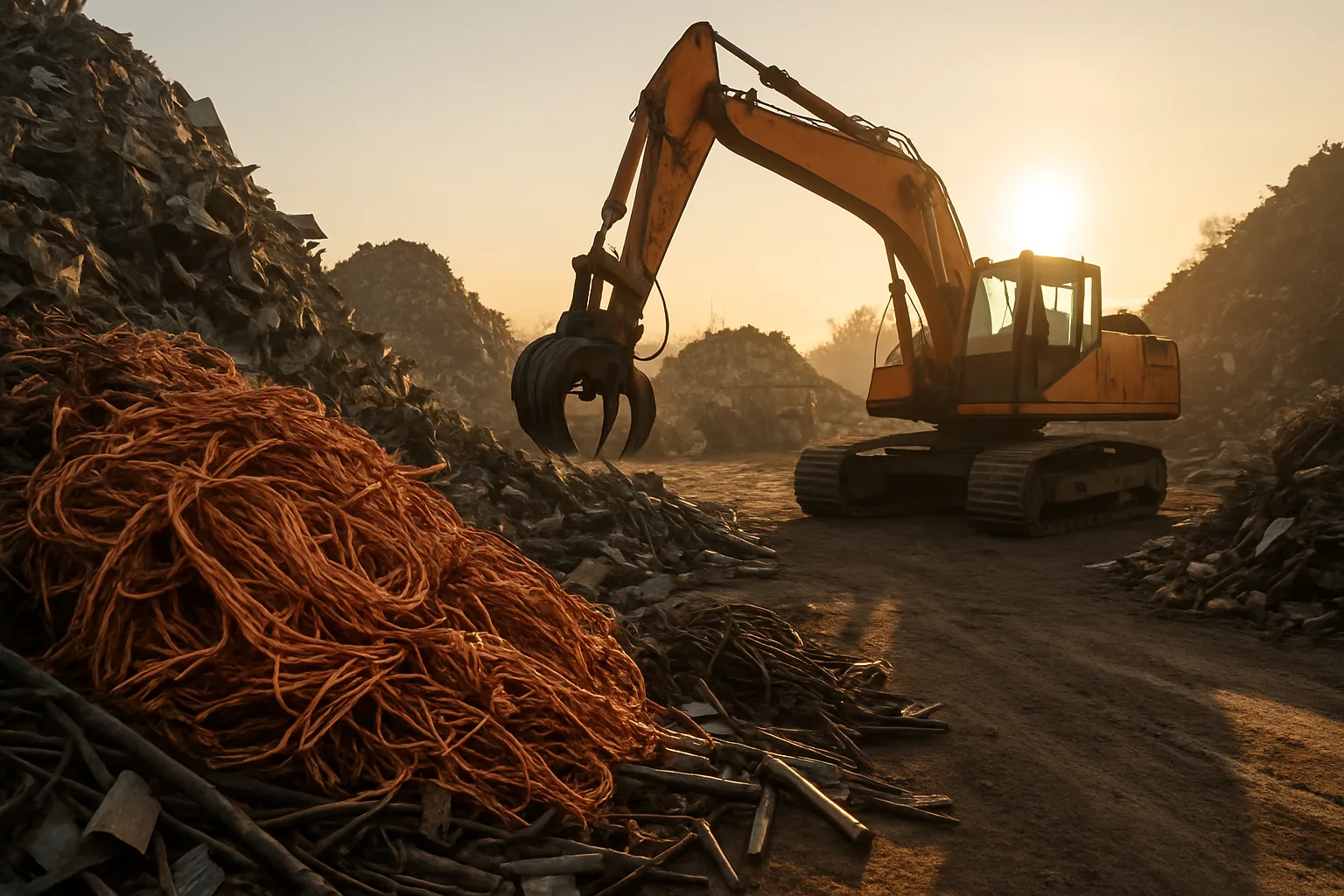
Why Electricians in Saskatchewan Are Leaving Money on the Table with Copper Scrap
Picture this: a journeyman electrician wraps up a commercial rewire in Regina. There's a pile of stripped copper wire, old conduit, and a few lengths of copper pipe sitting in the back of the truck. He calls his usual scrap contact, gets a flat offer, and drives away with whatever they feel like paying that day. No competition. No transparency. Just take it or leave it.
That's exactly how trades in Saskatchewan have been handling their copper scrap for years — and it's costing them real money. If you run a crew, manage a shop, or pull wire for a living, the copper you accumulate isn't just scrap. It's a revenue stream. The question is whether you're managing it like one.
This piece breaks down how electricians, plumbers, and HVAC technicians across Saskatchewan are getting more for their copper wire, pipe, and cable — and how platforms like SMASH are changing the math entirely.
The Copper Scrap Problem Most Trades Don't Talk About
Copper is one of the most valuable non-ferrous metals in any scrap yard. Bare bright copper wire, #1 copper pipe, and insulated cable each carry different grades — and those grades translate directly to your payout. Most tradespeople know this. What they don't always know is how significant the spread can be between a single buyer's offer and what the open market will actually bear.
The old model works like this: you accumulate copper over a few weeks of jobs, load it up, drive to a yard, and take whatever number they quote you. That's one data point. One buyer. One price — often set before you walked in the door.
When you introduce competition — multiple vetted buyers looking at the same load — price discovery happens. That's not a theory. That's how markets work. SMASH brings that competitive dynamic to trades and recyclers across Saskatchewan, connecting your material to a network of buyers instead of one contact with a clipboard.
- Bare bright copper wire — stripped, clean, no insulation — commands the highest price per pound
- #1 copper pipe — clean, uncoated, no fittings — sits just below bare bright
- Insulated copper wire — priced by estimated copper content based on insulation thickness
- Copper cable (armoured or jacketed) — lower per-pound rate but high volume from commercial jobs
- Copper-bearing scrap (motors, coils, transformers) — mixed grade, priced by content
Knowing your grades before you show up — or before you list — matters. Presenting clean, sorted, properly described copper tells buyers you know your material. It gives them confidence. Confidence tends to show up in the offer.
How Regina Electricians Are Maximizing Copper Scrap Returns
Regina sits at the centre of a lot of commercial and industrial construction activity. Rewires, new builds, service upgrades, and industrial fit-outs all generate copper scrap at volume. An electrician running two or three commercial jobs simultaneously can accumulate hundreds of pounds of copper wire in a single week.
The trades who do best with their scrap share a few habits. They sort on site — bare bright in one container, insulated in another, mixed in a third. They don't mix grades because contaminated copper drops in value fast. They document weights before drop-off or pick up so there are no surprises at settlement. And they treat their scrap as a line item, not an afterthought.
For Regina scrap metal services, volume is the unlock. Small loads from a single job may not qualify for free pick up — in that case, we'll point you toward drop-off options that still get you the best price. But when you're talking about a truckload of insulated wire, copper pipe off a stripped building, or a season's worth of armoured cable from multiple jobs, that's a qualifying load. That's when free pick up across Saskatchewan makes sense for everyone.
A few electricians in the Regina area have shifted to scheduling monthly pick ups rather than making random trips to the yard. They accumulate, sort, and call when the load is worth moving. It simplifies the workflow and keeps them focused on billable hours — not scrap logistics.
Plumbers, HVAC, and the Other Trades Sitting on Non-Ferrous Gold
Copper isn't just an electrician's material. Plumbers pull copper pipe on every older residential job they touch. A hot water tank replacement, a kitchen reno, or a basement suite plumbing rough-in can generate 20 to 40 feet of copper pipe before lunch. Multiply that across a week of jobs and you've got weight worth managing properly.
HVAC technicians pull refrigerant coils, copper tubing, and sometimes entire air handler units from older systems. Some of that material carries copper content that grades out well. The brass fittings, valve bodies, and copper-to-aluminum connections all have value — sometimes more than the technician expects when they actually weigh it out.
Contractors doing full demolitions — whether residential, commercial, or light industrial — often end up with mixed loads. Copper wire bundled with aluminum conduit, copper pipe alongside steel strapping, brass valves mixed in with iron fittings. The key is separating what you can before the load moves. Sorted non-ferrous commands better prices than a mixed bin every time.
If you're a tradesperson in Saskatchewan generating regular copper scrap from your work, the question isn't whether it's worth selling. It clearly is. The question is whether you're getting the best available price — or just the most convenient one. Book your free scrap pick up through SMASH Recycling and find out what competition actually does for your bottom line.
Free Pick Up for Qualifying Loads — What That Actually Means for Trades
Free pick up across Saskatchewan is real — but it's conditional. That's worth being honest about. A single appliance, one length of copper pipe, or a small box of wire cuttings isn't going to meet the threshold for a pick up run. The logistics don't pencil out for a small load, and we'd rather tell you that upfront than waste your time.
What does qualify? Here's a practical breakdown:
- Trade-volume copper accumulations — 100+ lbs of sorted copper wire, pipe, or cable
- Commercial job cleanouts — full rewires, building strips, major renovation scrap
- Shop cleanouts — electricians, plumbers, or HVAC shops clearing out accumulated off-cuts and ends
- Mixed loads with significant non-ferrous — copper plus aluminum, brass, or stainless
- Multi-vehicle or equipment loads — scrap vehicles combined with metal scrap from a property
Rural Saskatchewan is fully covered. If you're running jobs in communities outside Regina or managing a farm-based operation that's accumulated copper irrigation pipe, old pump motors, or electrical off-cuts, we run rural routes. Distance isn't the barrier most people assume it is when the load justifies the trip. Scrap metal pick up across Saskatchewan is genuinely what we do — not just an urban service with rural listed as an afterthought.
Trades are also welcome to bring loads in directly if that's more convenient. Drop-off is always an option, and it removes the minimum-load threshold entirely. Some electricians prefer to drop off at the end of a long run rather than schedule a pick up. Either works.
Documentation, Weight Tickets, and Getting Paid Properly
One thing experienced trades insist on — and newer scrappers sometimes overlook — is documentation. Weight tickets matter. Grade descriptions matter. Photo documentation of your load before it moves protects you if there's ever a dispute about what was in the bin.
This is where the systems behind SMASH add practical value beyond just the competitive pricing. Photo documentation, weight tracking, and clear load descriptions give buyers the information they need to bid confidently. A well-documented load of #1 copper pipe described accurately — weight, grade, condition — attracts more competitive bids than a vague "copper scrap, misc." listing.
For high-volume trades running regular loads, this documentation also builds a transaction history. That history is useful when you're negotiating terms, planning cash flow, or simply tracking what your scrap revenue has been over a quarter. Treating it like a business means tracking it like a business. You can read scrap metal pick up guides for Saskatchewan to get deeper into sorting, grading, and documentation best practices for trade materials.
Copper theft is also a real issue across Saskatchewan — particularly in industrial areas and rural properties. Proper documentation of your material's origin isn't just good practice. It's protective. Legitimate trades with legitimate scrap have nothing to worry about when documentation is clean from the start.
Selling Scrap Copper — The SMASH Difference for Saskatchewan Trades
The pitch isn't complicated. You generate copper scrap from your work. That copper has real value. The difference between taking the first offer you're given and putting your load in front of multiple vetted buyers can be meaningful — especially when you're moving volume consistently over the course of a year.
No subscription fees. No guessing at prices. Competition drives price discovery, and price discovery is what you're after. For trades in Regina and across Saskatchewan who are ready to stop leaving money in the truck, schedule your scrap metal pick up in Saskatchewan and see what the open market looks like for your material.
If you're ready to move copper scrap from your next job — or you've got a load ready to go right now — get in touch. Scrap metal pick up across Saskatchewan for qualifying loads. Trades always welcome. Top dollar for copper. Call 1-855-SMASH-74 or visit scrap-metal-pick-up.com to get started.
Frequently Asked Questions
Q: Do you offer free scrap vehicle pick up in Regina for electricians and trades with copper scrap?
Yes — for qualifying loads. If you're an electrician, plumber, or HVAC technician in Regina with bulk copper wire, pipe, or cable to move, that typically meets the threshold for free pick up. Single small loads may not qualify, but trade-volume copper accumulations usually do. Contact us to confirm before scheduling.
Q: How do I know what grade my copper scrap is before I call?
Copper grades down to a few main categories: bare bright (clean, stripped wire, no insulation), #1 copper (clean pipe and wire, no solder or fittings), #2 copper (has solder, paint, or minor contamination), and insulated wire (priced by copper recovery percentage). Sorting your material by type before the call helps you get an accurate quote faster.
Q: Can you pick up scrap copper from job sites outside Regina in rural Saskatchewan?
Yes. We run rural routes across Saskatchewan, including farm properties and remote job sites. The load needs to justify the trip — bulk copper, mixed non-ferrous, or larger loads work well. Call ahead to confirm the route and timeline for your area.
Q: What's the fastest way to sell copper scrap from a commercial electrical job in Regina?
Sort your material by grade on site, document the approximate weight, and contact us to schedule pick up or drop off. For larger commercial loads, pick up can often be arranged quickly. Having clean, sorted, well-described copper ready to move is the single biggest factor in fast turnaround and competitive pricing.
Q: Does SMASH handle mixed loads — copper plus steel, aluminum, or other scrap metals?
Absolutely. Mixed loads from job sites or shop cleanouts are common. Non-ferrous material (copper, aluminum, brass) and ferrous scrap (steel, iron) are weighed and priced separately. You don't need to separate everything perfectly — but the more sorted your non-ferrous is, the better the pricing on that material will be.
Stay ahead of the scrap metal market — follow SMASH on LinkedIn for industry updates, copper market insights, and tips for trades across Saskatchewan.