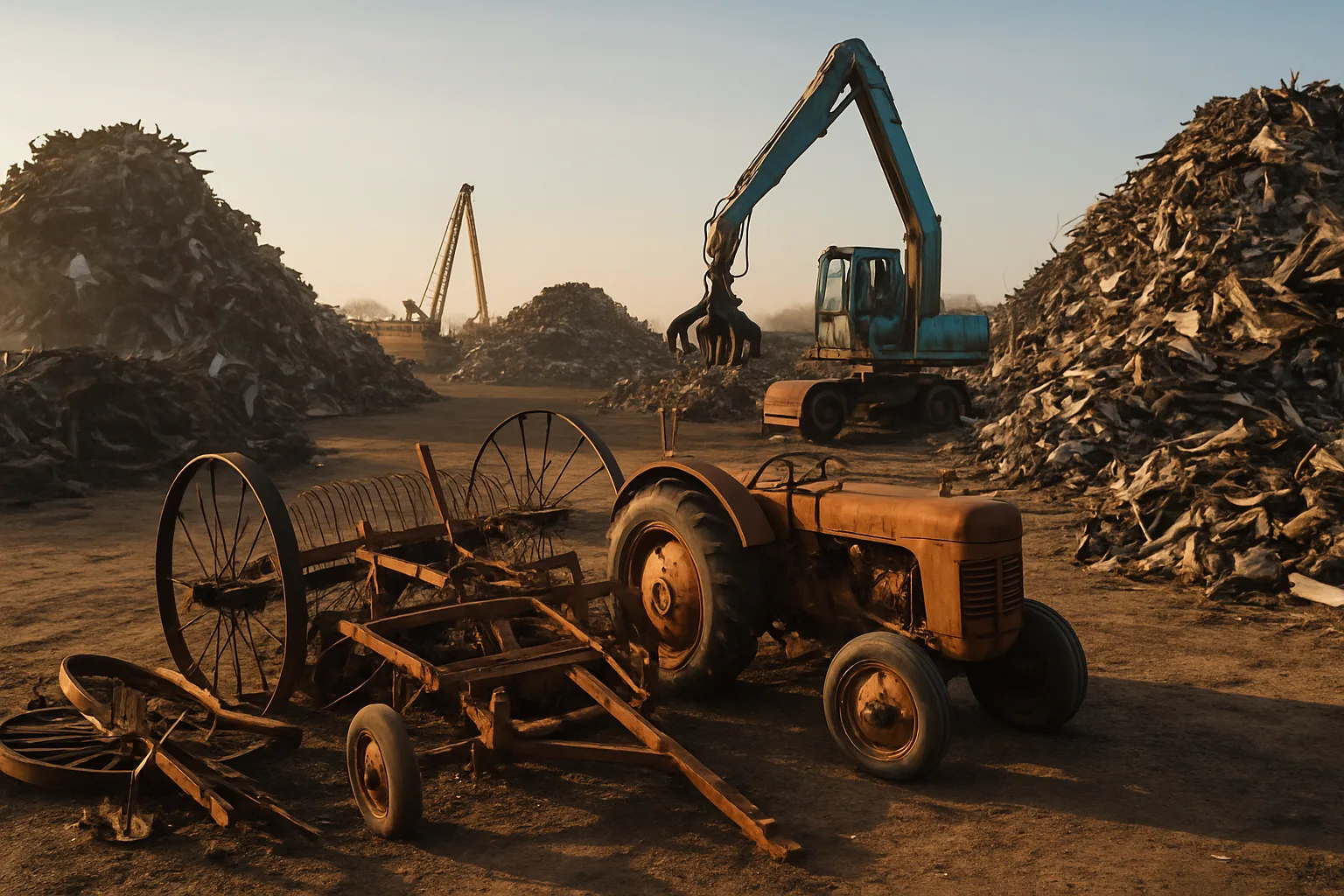
That Rusted Combine Has Been Sitting There Long Enough — Here's What It's Worth in 2026
Drive down any rural grid road in Saskatchewan and you'll spot them: old swathers half-buried in grass, combines with cracked cab glass, cultivators that haven't turned soil in two decades. Most farmers assume these machines are worthless. They're not. That rusted-out combine still has steel, cast iron, copper wiring, and aluminum in it — and the scrap market in 2026 is actively paying for all of it. The real question isn't whether your old equipment has value. It's whether you know how to get paid for it.
This week's roundup covers what's moving in the farm scrap space across the province, what old implements are actually worth when they hit the yard, and how scrap metal pick up across Saskatchewan has changed for rural operators who used to have to make a dozen calls just to get someone out the gate.
What Old Farm Equipment Is Actually Made Of (And Why It Matters for Your Payout)
Understanding your equipment's composition is the difference between accepting a lowball offer and knowing when to push back. Most older combines — especially pre-2000 models — are heavy on ferrous steel and cast iron. That's your base value. But the real money hides in the components most people overlook.
Here's what's typically recoverable from an old combine or implement:
- Structural steel and sheet steel — the frame, auger housings, grain tanks. Priced per pound at current ferrous rates.
- Cast iron — engine blocks, gear housings, axle components. Heavier and often priced slightly above shredder steel.
- Copper wiring harnesses — even a mid-sized combine can carry several pounds of copper wire. At current non-ferrous rates, this adds up fast.
- Aluminum — cab components, some newer-era header frames, fan housings.
- Stainless steel — found in some chaffer and sieve components on newer machines.
- Hydraulic motors and cylinders — depending on age and condition, these may have secondary market value before they're scrapped.
A full-size combine like an old 7700 or 8820 can weigh anywhere from 15,000 to 25,000+ pounds unloaded. Even at modest ferrous prices, that's a meaningful cheque. Add in the non-ferrous components and you're looking at significantly more. Don't guess — get it weighed and itemized.
Disclaimer: Scrap metal prices fluctuate with global commodity markets. Always verify current rates before committing to a sale. Check current pricing by contacting your local yard or read scrap metal pick up guides for Saskatchewan for up-to-date breakdowns.
Farm Scrap Pick Up Regina and Rural Saskatchewan — What Qualifies for Free Pick Up
This is the question we get the most: Is the pick up actually free? The honest answer is — it depends on what you've got. Free pick up for qualifying loads is very real, but "qualifying" means there's enough material to justify the haul. For farm cleanups, this threshold is usually easy to hit.
Qualifying loads for free farm scrap pick up typically include:
- Full combines, swathers, tractors, or headers
- Multiple pieces of equipment cleared in a single pick up
- Bulk farm implement cleanups — cultivators, air seeders, discs, harrows
- Old grain bins (knocked down or intact, discuss beforehand)
- Commercial volumes of non-ferrous — copper wire, aluminum irrigation components
- Oil field equipment and pipe (call ahead for specifics)
Single small items — a lone hydraulic cylinder, one tire rim — probably don't qualify for free pick up. Drop-off at a yard is the better option for those. But if you're clearing a machine shed or finally dealing with that back forty full of iron, that's exactly what free farm scrap pick up is designed for. For those in the city, our Regina scrap metal services cover urban and surrounding rural areas — you don't need to be out in the field to use this service.
Routes run regularly across the province — including areas well outside Regina and Saskatoon. If you're on a grid road three hours from the nearest city, call anyway. Rural pick up is part of the model, not an afterthought.
The Old Way vs. the SMASH Way — Why Competitive Auctions Change Your Farm Scrap Outcome
Here's how most farm scrap sales used to work: one buyer shows up, gives you a number, and you either take it or spend the next week trying to get someone else to drive out. There's no competition. There's no transparency. You have no idea if the number you're hearing reflects actual market conditions or just what that buyer feels like paying today.
That model is broken — and it's been broken for a long time.
Book your free scrap pick up through SMASH Recycling and the dynamic changes completely. SMASH puts your load in front of vetted buyers who compete for it. More buyers means better price discovery. You're not guessing at market value — you're letting the market tell you what it is. For high-value loads like full combines or significant non-ferrous volumes, that competition can reveal meaningful price differences between what one buyer offers and what several buyers will actually pay.
SMASH also handles documentation — photo records, weight tickets, inventory tracking, auto-invoicing. For Saskatchewan farmers dealing with multiple pieces of equipment or a full estate cleanup, that paper trail matters. You know exactly what left your yard and what you got paid for it.
Scrap Car Pick Up in Regina — What About Vehicles and Trucks on the Farm?
Old combines get the attention, but most farm yards also have vehicles. Old half-tons that haven't run in years. Grain trucks with blown engines. Service trucks rusting beside the shop. These fall under scrap car pick up — and yes, they can be picked up as part of a larger farm cleanup or on their own if the volume qualifies.
A few things worth knowing about scrap car pick up in 2026:
- No title? Not automatically a dealbreaker. Scrap car pick up no title situations happen regularly, especially with older farm vehicles. Call and explain the situation — most can be worked through with the right documentation or a statutory declaration.
- Catalytic converters matter. If your old trucks or SUVs still have their catalytic converters intact, that's non-ferrous value sitting under the vehicle. Don't strip them beforehand — let the buyer assess. Platforms like SMASH run catalytic converter auction processes that can return better value than selling to a single local buyer.
- Fluids need to come out. Gas, oil, and coolant need to be drained or noted before pick up. This is standard and your pick up team will confirm what's required.
- Scrap car pick up today is possible if you're in or near a serviced route — call in the morning, confirm availability, and loads can sometimes move same-day for qualifying vehicles.
If you've got a mix of vehicles and equipment on your property, schedule your scrap metal pick up in Saskatchewan and describe everything you're looking to move. Combining a vehicle pick up with an equipment haul often makes the whole trip qualify for free service.
Weekly Market Recap — What's Moving in Farm Scrap This Week (June 28, 2026)
This week, ferrous demand remains steady across the prairies heading into summer. Saskatchewan yards report consistent interest in bulk equipment loads — the kind of volume that comes from farm estate cleanups and end-of-season equipment clearouts. Farmers who've been holding off are starting to move material as storage costs and insurance on idle equipment add up.
Non-ferrous continues to be where the margin lives. Copper wire from older combines and grain handling equipment is moving well. If you've got irrigation infrastructure with aluminum or copper components, now is a reasonable time to get it assessed. Prices fluctuate — always confirm current rates — but buyer appetite for non-ferrous is strong.
On the vehicle side, scrap car removal in Regina and across the province is active. Urban and rural pick ups are both running. If you've got end-of-life vehicles taking up space in your yard or shop, the market isn't waiting.
For tradespeople — electricians, HVAC techs, plumbers working summer contracts — copper-bearing scrap from job sites is in demand. We pay top dollar for copper pipe, wire, and cable in trade quantities. Bring your loads in bulk or arrange a pick up if the volume qualifies.
How to Get the Most from Your Farm Equipment Scrap Sale
Before you call for pick up, a few steps that put more money in your pocket:
- Do a rough inventory. List what you've got — make, model, approximate weight if you know it. A 1980s combine is a different conversation than a 2005 model with precision components.
- Separate non-ferrous where you can. Copper wire harnesses, aluminum components — if you can identify and separate them, you may get a better breakdown price. If not, that's fine too.
- Check for secondary market value. Some headers, attachments, or hydraulic components may be worth more sold as parts than as scrap. Know before you call.
- Take photos. Send them when you call or email. It speeds up the quote process and ensures buyers have accurate expectations.
- Confirm access. Equipment needs to be accessible — we don't push into overgrown fields without knowing what we're getting into. If it's buried, say so upfront.
That's it. No complicated process. Scrap metal pick up across Saskatchewan for qualifying loads — call 1-855-SMASH-74 or visit scrap-metal-pick-up.com. Trades welcome, and if you're moving copper-bearing products from job sites or farm operations, top dollar is on the table for the right volumes.
Follow SMASH on LinkedIn for weekly scrap market updates, industry news, and tips on getting more from your next pick up: follow SMASH on LinkedIn.
Frequently Asked Questions
Q: Does scrap metal pick up in Regina include old farm equipment, or just cars and appliances?
Farm equipment absolutely qualifies — combines, tractors, cultivators, headers, swathers, grain bins, and more. For qualifying loads (bulk equipment, multiple pieces, or significant weight), pick up is free. Regina and surrounding rural areas are serviced regularly. Call ahead to describe what you've got so the right equipment is dispatched.
Q: Can I get a scrap car pick up if I don't have the title for the vehicle?
Scrap car pick up with no title is a situation that comes up often, especially with older farm trucks and rural vehicles. It's not automatically a dealbreaker. Call and explain the circumstances — most cases can be resolved with a statutory declaration or other documentation. Don't assume you're stuck just because the paperwork isn't in order.
Q: How does appliance pick up in Regina work for a single item versus a full cleanup?
A single appliance — one fridge, one washer — may not qualify for free pick up, and a drop-off at a yard might be the better option. If you're clearing out multiple appliances, a renovation, or combining appliances with other scrap, that's a different story. Full property cleanups and bulk loads are exactly what free pick up is designed for. Describe your situation when you call.
Q: What's the best way to get top dollar for farm scrap in Saskatchewan?
Know what you've got, separate non-ferrous from ferrous where possible, and don't sell to the first buyer who shows up with one number. Platforms like SMASH put your load in front of multiple vetted buyers — competition reveals what your material is actually worth rather than what one buyer feels like offering. Documentation matters too: weight tickets and photo records protect you on every load.
Q: Do you pick up farm scrap outside of Regina — in rural areas and small towns?
Yes. Rural Saskatchewan is core to what this service does. Farm cleanups, grain bins, combines parked on grid roads, oil field scrap — these are regular pick ups, not exceptions. Qualifying loads in rural areas receive the same free pick up service as urban loads. Call with your location and describe the material — routes across the province run regularly.