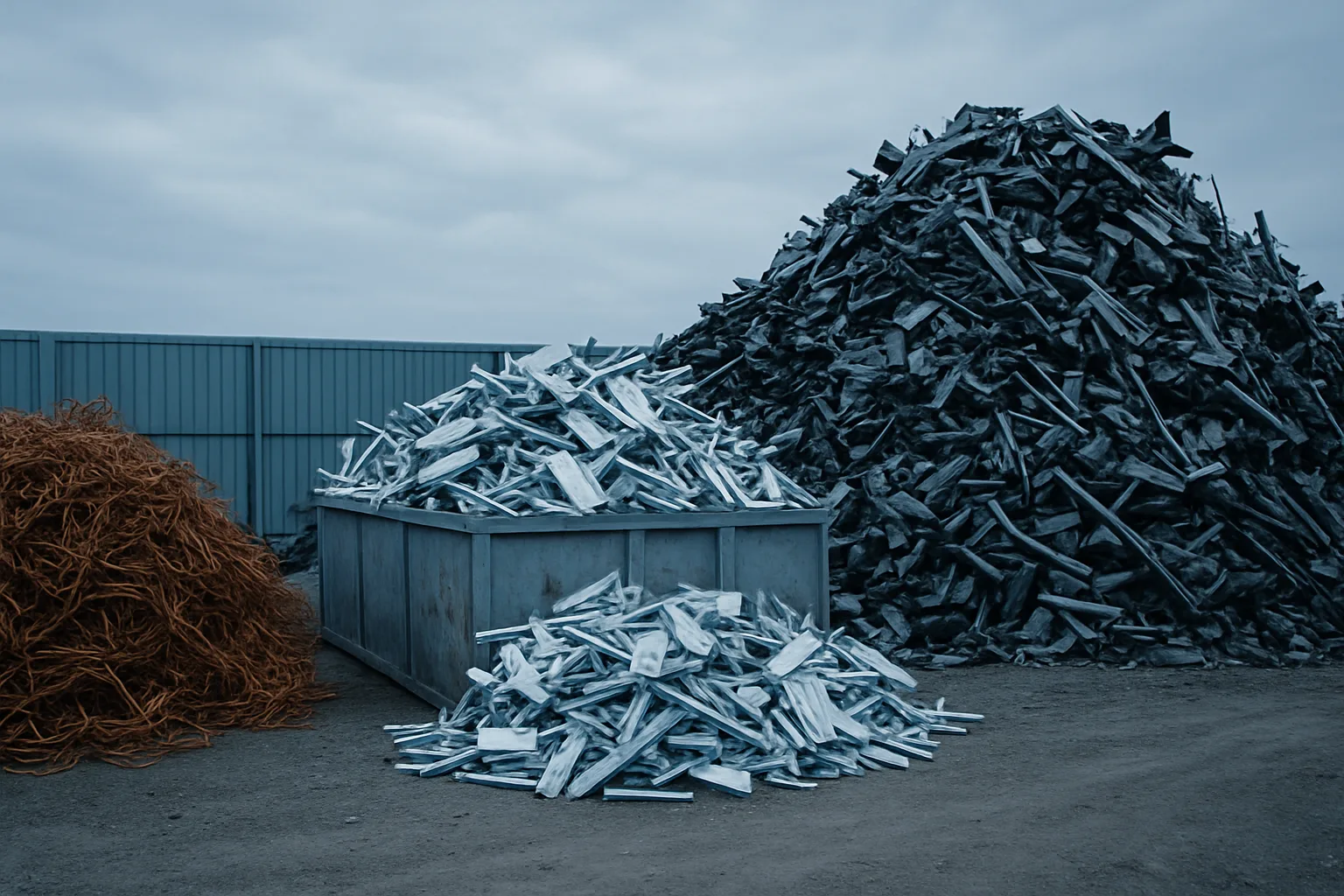
Why Saskatchewan's Commercial and Industrial Scrap Is Piling Up — And What to Do About It
If you run a plant, a shop, or an operation of any size in Saskatchewan, you already know the problem. Scrap accumulates fast. Old compressors, worn-out HVAC units, obsolete switchgear, dead forklifts, copper wiring pulled from a retrofit — it all ends up in a corner of your yard waiting for someone to deal with it. Most businesses aren't in the scrap business. So it sits.
That backlog costs you more than you think. It takes up usable space, creates liability, and — if you're not moving it strategically — it quietly bleeds value you'll never recover. Commercial and industrial operations across Regina and the rest of Saskatchewan generate significant non-ferrous and ferrous scrap every single year. The question isn't whether you have it. The question is whether you're getting anything close to fair value for it.
For scrap metal recycling Regina businesses and operations across the province, the difference between a reactive approach and a planned one can be measured directly in your pocket. This week's roundup breaks down what's happening in the commercial and industrial scrap space across Saskatchewan, and how to make it work harder for your operation.
The Commercial Scrap Landscape in Saskatchewan Right Now
Mid-2026 is a busy season for industrial scrap movement across the prairies. Facility retrofits, electrical infrastructure upgrades, and oil field equipment turnover are all generating substantial volumes. That's not speculation — that's what's showing up in the loads being moved right now. If your operation has been sitting on a pile of copper-bearing wire, old motors, or industrial HVAC components, the current environment rewards sellers who move with volume and documentation.
Non-ferrous is where the real money is. Copper wire, copper pipe, copper bus bar, aluminum cable, brass fittings — these commodities respond to global demand signals, and commercial volumes move the needle significantly versus what a homeowner might bring in. Electricians and contractors working large commercial jobs in Regina and across Saskatchewan are sitting on trade quantities that deserve trade-level pricing. That means more than a walk-in rate at a local yard.
Ferrous volumes — structural steel, heavy iron, old machinery — are steadier. They're the backbone of most industrial cleanouts. Prices fluctuate, but volume matters here too. A single fabrication shop clearing out old equipment generates more leverage than most people realize. Don't assume the first number you hear is the market. It rarely is.
Disclaimer: Scrap metal prices fluctuate with commodity markets. Check current rates before scheduling a pick up or making decisions based on pricing.
What Qualifies for Free Commercial Scrap Pick Up in Saskatchewan
Let's be direct about this. Not every scrap job qualifies for scrap metal pick up across Saskatchewan at no charge. Small loads — a single appliance, one motor, a handful of pipe — may carry a pick up fee, or you're better off dropping those off directly. What does qualify for free pick up is what most commercial and industrial operations actually have: bulk volume, multiple units, or consistent trade quantities of non-ferrous material.
Here's what typically qualifies:
- Facility cleanouts — multiple tons of mixed ferrous and non-ferrous, structural steel, racking, and equipment
- Electrical contractor scrap — copper wire pulls, cable remnants, conduit, panels, transformers
- HVAC and refrigeration — old rooftop units, compressors, copper coils, aluminum fin stock
- Industrial equipment — motors, pumps, generators, switchgear, control panels
- Oil field and agriculture — pipe, tanks, old machinery, grain bin steel, combine frames
- Multiple scrap vehicles or equipment units — fleet turnover, decommissioned assets
Items must be accessible — outside, in a yard, or in an open shop or garage. We don't enter private homes, and we need to be able to get equipment in to load safely. Have a mixed load with some non-ferrous and some heavy iron? That's fine. We'll sort it. The key is volume and accessibility.
If you're a tradesperson in Regina handling regular job-site scrap, the math is simple. Copper wire pays significantly more per pound than steel. If you're bundling your wire pulls and bringing them in mixed with garbage, you're losing money on every load. Separate your non-ferrous. Move it in trade volume. Get top dollar for it.
Appliance Pick Up Regina: What Commercial Volumes Actually Look Like
The term appliance pick up usually brings to mind one old fridge on a curb. That's not what we're talking about here. Commercial appliance scrap — property management companies clearing units, hotel and hospitality renovations, restaurant equipment turnover — generates the kind of volume that justifies scheduled commercial routes and proper compensation.
Old commercial refrigeration units contain valuable copper and aluminum components inside. Commercial washers and dryers have significant steel mass plus motors worth separating. Restaurant equipment — ranges, hoods, refrigerated prep tables — is a mix of stainless steel, aluminum, and copper wiring. None of this is junk. It's commodity material with weight and value.
If you manage properties in Regina or operate commercial facilities anywhere in Saskatchewan, you've probably dealt with the question of what to do with a stack of old appliances from a renovation. The right answer isn't a junk hauler who charges you to take it away. The right answer is a scrap removal service that counts the volume, grades the material, and either pays you or picks it up free depending on what you've got.
Platforms like SMASH Recycling — free scrap metal pick up across Canada operate on a principle that's straightforward: documented material moves faster and pays better. When buyers know what they're bidding on — weight estimates, photos, metal types — competition happens. Competition means better price discovery. That applies to large commercial appliance loads just as much as it applies to a farm cleanup or a load of copper wire.
B2B Scrap Metal: Moving Commercial Volumes the Right Way
For operations that generate scrap on a recurring basis, a transactional one-off approach leaves money on the table every time. A B2B scrap metal marketplace approach — where your loads are documented, buyers are vetted, and auctions drive the price — is how commercial operators maximize recovery on material they're going to generate anyway.
SMASH was built for exactly this. Not for the homeowner with a single appliance, but for the yard operator, the contractor, the industrial facility, the fleet manager sitting on decommissioned equipment. When you bring documented loads to a competitive environment, you stop guessing at the price and start discovering it. That's the difference between calling one buyer and letting multiple vetted buyers compete.
Key advantages for commercial operators using SMASH:
- Vetted buyers — no tire kickers, no low-ball retail buyers. Real scrap buyers with real capacity.
- Inventory documentation — photo documentation, weights, metal grades. Buyers know what they're bidding on.
- Auction format — competition drives better price discovery than a single phone call ever will.
- Auto-invoicing — paperwork handled. BOLs, packing lists, transaction records. Clean paper trail for your operations.
- No subscription fees — SMASH only wins when you win. That alignment matters.
If your operation is generating consistent scrap volume and you're still running it through one buyer because that's always how it's been done, that's worth reconsidering. Read scrap metal pick up guides for Saskatchewan to understand how documented, competitive scrap sales work and what it means for your bottom line.
Scrap Vehicle and Equipment Removal for Saskatchewan Operations
Fleet operators, municipalities, construction companies, and agricultural operations all eventually face the same problem: decommissioned vehicles and equipment taking up space and depreciating to zero. A forklift that no longer runs. A utility truck with a blown engine. A combine sitting behind the shop for three years. These aren't sentimental items. They're ferrous and non-ferrous material with a market value.
Scrap car removal and scrap vehicle pick up for qualifying loads across Saskatchewan is something we handle directly. Multiple vehicles at one location? That's a qualifying pickup. A single vehicle in a remote rural location may still qualify depending on metal content and accessibility — it's worth a call to find out before you assume otherwise.
For farm operations specifically, the volume of steel tied up in old equipment is often larger than owners realize. A single grain bin structure can yield several tons of steel. An old combine frame is heavy iron. Tandem axle trailers, cultivators, swathers past their useful life — all of it has a market. The challenge is logistics, which is exactly why Regina scrap metal services and rural Saskatchewan pickup routes exist. You shouldn't have to haul it yourself.
Oil field operators dealing with surplus pipe, tanks, or decommissioned wellsite equipment are in a similar position. High-grade steel, sometimes with significant non-ferrous content, sitting in locations that are technically accessible but inconvenient. Volume makes these pickups viable. If you've got a wellsite or a lease with a pile of surplus metal, document what you have and make the call.
How to Prepare Your Commercial Scrap Load for Pick Up
A little prep work on your end makes pick up faster, safer, and better for your payout. You don't need to sort every piece. But a few steps go a long way.
- Separate your non-ferrous from your ferrous. Copper, aluminum, brass, and stainless steel pay differently than structural steel and iron. Mixing them together costs you money and slows sorting.
- Clear a path for equipment. Loaders and trucks need clearance. If material is buried under other debris, that adds time and may affect whether a load qualifies for free pick up.
- Document what you have. A rough inventory — types of metal, estimated weight, number of units — helps schedule the right equipment and lets buyers price more accurately.
- Flag anything with fluids. Vehicles with fuel or coolant, compressors with refrigerant, hydraulic systems — let us know upfront. Proper handling keeps the load viable and the process clean.
- Know your access situation. GPS coordinates for rural sites, gate codes, contact for on-site access. The smoother the logistics, the faster your material moves.
Commercial and industrial operations that schedule your scrap metal pick up in Saskatchewan with some preparation in place consistently get better results than those who call and say "come get whatever's here." A documented load is a credible load. Credible loads attract better buyers and better prices.
Frequently Asked Questions
Q: What types of commercial scrap qualify for free pick up in Regina?
Bulk loads qualify — that means facility cleanouts, multiple scrap vehicles, trade quantities of copper or non-ferrous material, large equipment, and industrial machinery. Single appliances or small mixed loads may carry a pick up fee; drop-off is often the better option for those. The threshold is volume and material value, not the type of business you run.
Q: How does scrap metal recycling in Regina work for businesses that generate scrap regularly?
For recurring commercial scrap generators, the best approach is a documented, scheduled relationship rather than one-off calls. Platforms like SMASH allow commercial operators to log inventory, attract vetted buyers, and run competitive auctions on loads rather than accepting a single buyer's offer. Regular volume means regular leverage — use it.
Q: Do you pick up old commercial appliances in Regina?
Yes, for qualifying volumes. Property managers, hospitality operations, and commercial facility renovations often generate appliance volumes that justify pick up. Old commercial refrigeration, washers, dryers, and kitchen equipment all have steel, copper, and aluminum value. Contact us with a rough count and location to confirm whether your load qualifies for free pick up.
Q: What's the difference between a junk removal service and a scrap metal pick up service for commercial operations?
A junk removal service charges you to haul away material they then sell. A scrap metal pick up service either pays you for the material or picks it up free based on the value of what you have. For commercial operations with real scrap volume, those are very different economics. You should not be paying to remove metal that has commodity value.
Q: Can you pick up scrap vehicles from a rural Saskatchewan location, not just Regina?
Yes. Rural routes across Saskatchewan are part of what we do — farm cleanups, oil field surplus, rural commercial sites. Location matters for logistics, but don't assume rural disqualifies you. Multiple vehicles or high-value non-ferrous material at a rural site often makes the route viable. Call with the location and a description of what you have, and we'll tell you straight whether it works.
If your operation in Regina or anywhere across Saskatchewan is sitting on commercial or industrial scrap that's taking up space and generating zero return, that's a problem with a straightforward solution. Scrap metal pick up across Saskatchewan is available for qualifying loads — bulk material, trade scrap, multiple vehicles, farm and oil field surplus. Trades are welcome, and we pay top dollar for copper-bearing products. Call 1-855-SMASH-74 or visit scrap-metal-pick-up.com to get it scheduled.
Follow SMASH on LinkedIn for weekly scrap market updates, commodity insights, and practical guides for commercial and industrial operators across North America.