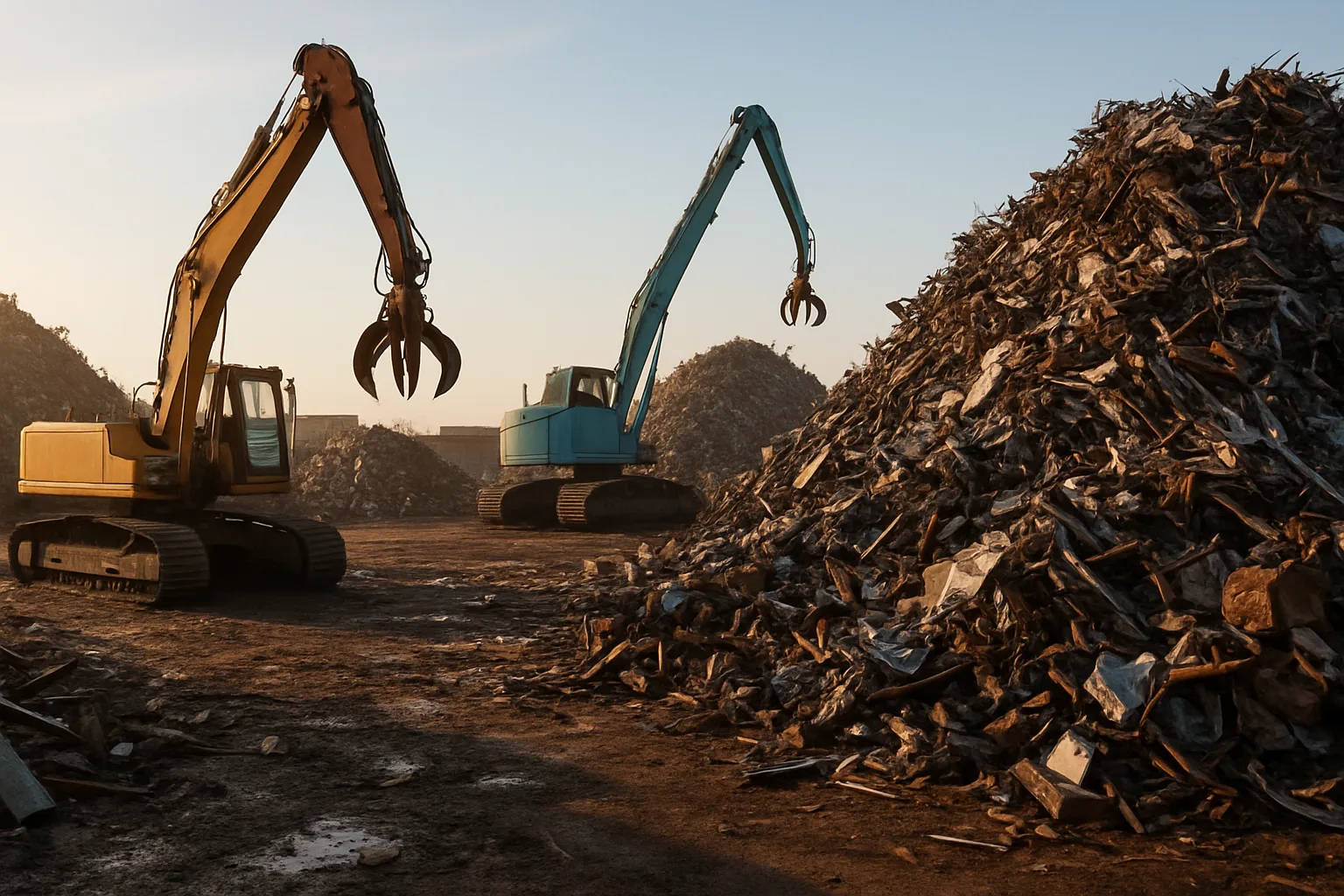
When a Regina HVAC Company Cleared 12 Years of Industrial Scrap — Here's What Happened
Most commercial operations don't have a scrap problem. They have a scrap accumulation problem. Equipment piles up. Old units get shoved to the back of the yard. Copper-bearing components get stacked in a corner "for later." Then one day, you've got a decade of material sitting on your property and no clear plan to move it. That's exactly where one Regina-based HVAC and mechanical contractor found themselves — and how they turned a logistics headache into real recovered value.
This case study walks through how a mid-sized commercial operation handled a major industrial scrap removal in Regina, what they learned, and how scrap metal pick up across Saskatchewan works for operations at this scale. If you run a trades business, a facility, or a commercial property with years of accumulated equipment, read this before your next cleanout.
The Problem: 12 Years of HVAC Equipment, Zero Plan
The company had been operating across Regina and surrounding rural Saskatchewan for over a decade. They did commercial installs, retrofit jobs, and mechanical maintenance contracts. Over time, removed equipment — old rooftop units, condensers, copper refrigerant lines, sheet metal ductwork, compressors, and assorted non-ferrous components — built up at their staging yard. Rough estimate: somewhere between 15,000 and 20,000 kg of mixed scrap metal.
They'd made a few calls to local buyers over the years. The responses were frustrating — inconsistent pricing, vague offers on mixed loads, and no real infrastructure to handle a bulk pickup of this scale without a lot of coordination on their end. One buyer quoted a flat rate for the whole pile without even looking at the non-ferrous content. That's the old way. One buyer. One call. Guess at the price and take it or leave it.
Here's what they were actually sitting on:
- Copper refrigerant tubing and coils — stripped and unstripped, multiple grades
- Copper wire from electrical disconnects — a high-value category that often gets underpriced in bulk mixed quotes
- Aluminum condensers and fan housing — moderate value, significant weight
- Compressors — both whole and cores
- Sheet metal and steel ducting — high volume, lower per-pound value
- Assorted motors and controls — copper windings, mixed board scrap
The problem wasn't the scrap. It was that nobody had ever separated it properly or documented what they had. The pile looked like "junk" to an untrained buyer. To anyone who knew what they were looking at, it was a significant non-ferrous haul.
The Fix: Separation, Documentation, and Competitive Pricing Through SMASH
The turning point came when their operations manager started looking at how commercial and industrial scrap is handled differently from residential junk removal. The first practical step wasn't booking a truck — it was sorting the pile.
Separating non-ferrous from ferrous material before any buyer sets eyes on it changes the conversation entirely. Mixed loads get priced on the lowest common denominator. Clean-separated copper gets priced as copper. Clean-separated aluminum gets priced as aluminum. The difference in recovered value on a load this size isn't marginal — it's substantial.
Once the material was categorized and rough weights were estimated, they used a Canadian scrap metal pick up and recycling marketplace — specifically SMASH — to put the load in front of vetted buyers who could compete on price. That's the difference between one offer and market discovery. More buyers bidding on documented, separated loads means you stop guessing what your scrap is worth and start finding out.
Key steps the company took before listing:
- Sort by category: Copper wire in one area. Copper pipe and coils separate. Aluminum components together. Steel and sheet metal staged for bulk pickup.
- Photograph everything: Grade, condition, approximate quantity. Photo documentation gives buyers confidence and reduces lowball offers based on assumptions.
- Estimate weights: Even rough estimates improve offers. Buyers don't like surprises at the scale.
- Flag high-value items: Compressor cores, motor windings, and stripped copper were called out separately rather than buried in a mixed-metal description.
Using a platform like SMASH means the inventory doesn't get eyeballed by one buyer with no competition. It gets documented, posted, and priced by the market — not by whoever picked up the phone that day.
Appliance Pick Up Regina: What Commercial Volumes Look Like
The HVAC contractor's situation is more common than people think. But the same dynamics apply to other commercial operations across Regina and rural Saskatchewan — just with different equipment categories.
A restaurant group clearing kitchen equipment — commercial refrigerators, walk-in cooler coils, gas ranges with copper fittings — is sitting on non-ferrous value that a flat "appliance pick up" quote will almost always undervalue. A property management company doing a multi-unit renovation in Regina might have dozens of old washers, dryers, and electric ranges to move. Individual units might not qualify for free pick up, but a building-wide cleanout at commercial volume is a completely different conversation.
That's the threshold that matters. Free pick up for qualifying loads means bulk volume, multiple items, trade quantities of non-ferrous, or commercial cleanouts with meaningful scrap weight. A single appliance in a residential setting may involve a fee or require drop-off. Twenty commercial refrigerators from a restaurant renovation in Regina? That's a qualifying load. The logistics become our problem, not yours.
For Regina scrap metal services, commercial operations get priority scheduling precisely because the volume justifies the route. We're not running across the city for one unit. We're building efficient routes that work for high-volume commercial and industrial pickups — which is when everybody wins.
What Saskatchewan Trades Operations Should Know Before Their Next Cleanout
If you run a plumbing, electrical, HVAC, or mechanical operation anywhere in Saskatchewan — including rural routes — you're generating non-ferrous scrap on every job. The copper wire you pull from an old panel. The copper pipe from a re-pipe job. The refrigerant tubing from equipment swaps. It adds up fast, and most operations either sell it too cheap or let it pile up too long.
Here's what the HVAC contractor's experience reinforces for any trades operation:
- Don't mix your copper grades. Bare bright wire, #1 copper, #2 copper, and insulated wire all price differently. Mixing them costs you money at the scale.
- Store it smart. Non-ferrous in containers, away from ferrous contamination. Rust staining or iron contamination drops your grade — and your price.
- Document trade quantities. When you're ready to move product, photos and rough weights make pricing faster and more accurate. Buyers don't guess on documented loads.
- Don't take the first call price. One buyer quoting your copper pile without competition is not market price. It's that buyer's preference. Competition reveals the actual market.
- Schedule bulk pickups, not one-off trips. Build up a meaningful quantity before booking. Qualifying load thresholds make the logistics viable for everyone.
For operations across read scrap metal pick up guides for Saskatchewan — there's a real difference between selling copper as a trade versus selling a single pipe to a walk-in counter. Know which category you're in and price accordingly.
Farm and Industrial Scrap: The Rural Saskatchewan Angle
Regina is a hub, but Saskatchewan scrap volume lives on farms, acreages, and oil field operations. Old combines, grain augers, bins, field equipment, irrigation systems — the weight is significant and the non-ferrous content is real. A single retired combine has substantial copper in the wiring harness and electrical system. An oil field location cleanout can involve steel, aluminum, copper alloy fittings, and electrical cable in volumes that dwarf most urban commercial jobs.
Rural farm scrap pick up across Saskatchewan works differently than city routes. Distances are longer, scheduling matters more, and the qualifying load threshold is typically higher. But the value is also there — especially when the equipment hasn't been touched in a decade and nobody's stripped the copper-bearing components yet.
For farm cleanups and rural industrial operations, free pick up for qualifying loads applies when the volume makes the route viable. That usually means significant equipment weight, multiple pieces, or high non-ferrous content that justifies the haul. Oil field scrap, decommissioned equipment, and large-volume farm cleanouts are exactly the kind of jobs where competitive pricing through a platform like SMASH recovers more value than a single buyer offer ever will.
The Outcome: Why This Approach Works for Commercial Scrap
The Regina HVAC contractor's cleanout took three coordinated pickups over two weeks. Separated loads. Documented weights. Buyers who bid on what the material actually was — not a rough guess at a mixed pile. The copper-bearing components priced as copper. The aluminum priced as aluminum. The ferrous bulk moved separately at volume weight.
No invented numbers here — prices fluctuate and every load is different. But the principle holds: documented, separated, competitively priced scrap consistently returns more than a single-buyer cash offer on a mixed pile. That's not a sales pitch. It's how commodity markets work.
If your operation in Regina or anywhere across Saskatchewan is sitting on accumulated commercial or industrial scrap, the approach is the same whether it's HVAC equipment, restaurant appliances, trade copper, or farm machinery. Sort it. Document it. Get competition on the price. And schedule your scrap metal pick up in Saskatchewan when the volume is right.
Scrap metal pick up across Saskatchewan for qualifying loads. Trades always welcome — top dollar paid for copper wire, pipe, coils, and copper-bearing products. If you're doing a commercial cleanout in Regina or running a farm cleanup anywhere in the province, call 1-855-SMASH-74 or visit scrap-metal-pick-up.com to find out if your load qualifies.
Frequently Asked Questions
Q: Does appliance pick up in Regina cost anything for commercial volumes?
Free pick up applies to qualifying loads — commercial volumes, multiple units, or high non-ferrous content that makes the route viable. A single residential appliance may involve a fee or require drop-off at a yard. A full restaurant kitchen cleanout or multi-unit building renovation in Regina is a different situation entirely — contact us to confirm your load qualifies.
Q: What's the difference between regular appliance removal and commercial scrap pick up in Regina?
Volume and content. Residential junk removal moves one item. Commercial scrap pick up handles bulk equipment, non-ferrous separation, and documented loads at scale. Commercial refrigerators, HVAC equipment, and trade copper all get priced differently than a single household washer — and should be. For commercial operations in Regina, the pricing conversation starts with what you have, not a flat per-item rate.
Q: How does a scrap metal auction platform help me get a better price on my commercial scrap?
A scrap metal auction platform like SMASH puts your documented load in front of multiple vetted buyers who compete on price. One call to one buyer gives you one offer — which may or may not reflect the actual market. Competition reveals what your load is actually worth. Documented, separated loads with photos and estimated weights attract stronger bids than vague mixed-pile descriptions.
Q: Do you pick up scrap metal in rural Saskatchewan, not just Regina?
Yes. Farm cleanups, oil field scrap, and rural industrial equipment across Saskatchewan are all serviceable for qualifying loads. Rural routes require higher volume thresholds to make the haul viable, but farm equipment, grain bins, combines, and oil field material often meet that bar easily. Contact us with your location and rough description of what you have.
Q: What copper-bearing products pay the most for trades businesses in Saskatchewan?
Bare bright copper wire and clean #1 copper pipe consistently sit at the top of the non-ferrous price range. Insulated wire, aluminum-copper coils from HVAC equipment, and copper motor windings also carry strong value when separated and documented properly. The key is not mixing grades — sorted copper at trade quantities prices significantly better than mixed non-ferrous in a bulk pile.
Disclaimer: Scrap metal prices fluctuate based on commodity markets and load conditions. All pricing is subject to current market rates at the time of pickup. Contact us for current pricing on your specific materials.
Stay current on scrap metal market trends and pick up industry updates — follow SMASH on LinkedIn at linkedin.com/company/scrap-metal-auction-sales-hub.